Masters of the Universe: A Nostalgic Explainer
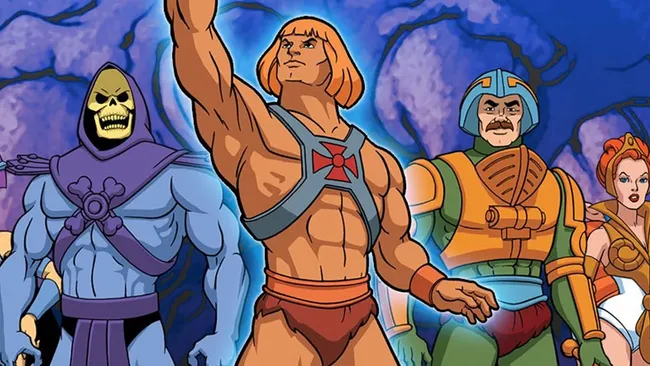
We still hear it. That metallic clink of He-Man's sword echoing through the living room as Saturday morning cartoons flickered on the old CRT. The smell of fresh cereal drifts from the kitchen table where we lined up our action figures before the show started. It was a ritual. And at the center of it all was Masters of the Universe , a franchise that started as a toy line and became a cultural phenomenon. In this explainer, we'll travel back to Eternia, meet the heroes and villains, dig into the toys that started it all, and look at why this crazy world of muscle-bound warriors and skull-faced sorcerers still matters today. Strap in. We're running it back.
Table of Contents
-
The World of Eternia: Castle Grayskull and Beyond
-
The Heroes: He-Man, Teela, and Orko
-
The Villains: Skeletor, Evil-Lyn, and the Horde
-
The Toys: From a Toy Company's Dream to Your Bedroom Floor
-
The Cartoon: Saturday Mornings with He-Man and Battle Cat
-
FAQ
-
Conclusion
The World of Eternia: Castle Grayskull and Beyond
The land of Eternia is a weird, wonderful place. It's got laser cannons and magic spells. Medieval castles and alien tech. It's a planet that sits at the center of the universe, or so the stories say. And at the heart of it all stands Castle Grayskull, a giant skull-shaped fortress that holds the secrets of the cosmos. He-Man defends it. Skeletor wants to conquer it. The whole conflict revolves around that one creepy building.
Think about it this way: Eternia is basically a super-powered fantasy world with a sci-fi paint job. There are jungles, deserts, frozen tundras, and weird green skies. The lore comes from those little mini-comics that came packed with the action figures. Those comics introduced characters like He-Man, Skeletor, and the Sorceress. They gave us the backstory: Prince Adam, the cowardly prince, says "By the power of Grayskull!" and transforms into the most powerful man in the universe. Only a few people know his secret: Orko, his pet Battle Cat, and the Sorceress.
The world didn't just exist in our heads. It was built through toys. The original 1982 Castle Grayskull playset came with a trap door, a working elevator, a laser cannon, and a weapon rack. It was every kid's dream fortress. You could defend it or storm it. The playset is still highly sought after today, with loose complete versions selling for around $200 and mint-in-box examples fetching over $700. That's because Castle Grayskull is the anchor of the whole saga. Without it, there's no power. No conflict. No He-Man.
In 2026, you can still visit Eternia through the animated series Masters of the Universe: Revelation and its follow-up Revolution. They bring the world back with modern animation, but the soul is the same: epic battles, moral lessons, and that weird mix of fantasy and technology that only the 80s could cook up. The franchise has expanded into comics, movies, and multiple TV series, all rooted in that original imaginative world.
The Heroes: He-Man, Teela, and Orko
Let's talk about the good guys. First up: He-Man. He's the strongest, bravest, most powerful man in the universe. But his alter ego is Prince Adam, a scrawny teen who always seemed to find trouble. That transformation , from coward to hero , was a huge part of the show. He-Man has the Power Sword, a battle axe, and a shield. He rides Battle Cat, a green tiger with armor. Every episode ended with a moral, usually about believing in yourself or helping others. That cheesy but genuine tone made the cartoon stick with us.
Teela is the captain of the Royal Guard. She's tough, smart, and doesn't put up with anyone's nonsense. In the early minicomics, she was Man-At-Arms's adopted daughter. She grew up into one of Eternia's best fighters. Her toy came with a snake headdress and a staff. We've found a kindred spirit in Teela, she's the kind of character who didn't need to be rescued. She did the rescuing.
And then there's Orko. A floating, clumsy troll who wears a hood and a scarf. He's the comic relief. Orko is from Trolla, a magical dimension. His spells often backfire, causing chaos. But he's loyal to Prince Adam and the Sorceress. In the cartoon, Orko was voiced by Alan Oppenheimer and became a fan favorite. As kids, we laughed when he botched a spell. As adults, we realize he added heart. The toys captured his goofy charm, though his figure was often left behind in the toy box. Orko's presence reminds us that even in a world full of muscle and magic, you need a friend who makes you smile.
The heroes weren't just good guys. They were role models. They taught us to stand up for what's right, even when it's hard. That's why we still remember them decades later.
The Villains: Skeletor, Evil-Lyn, and the Horde
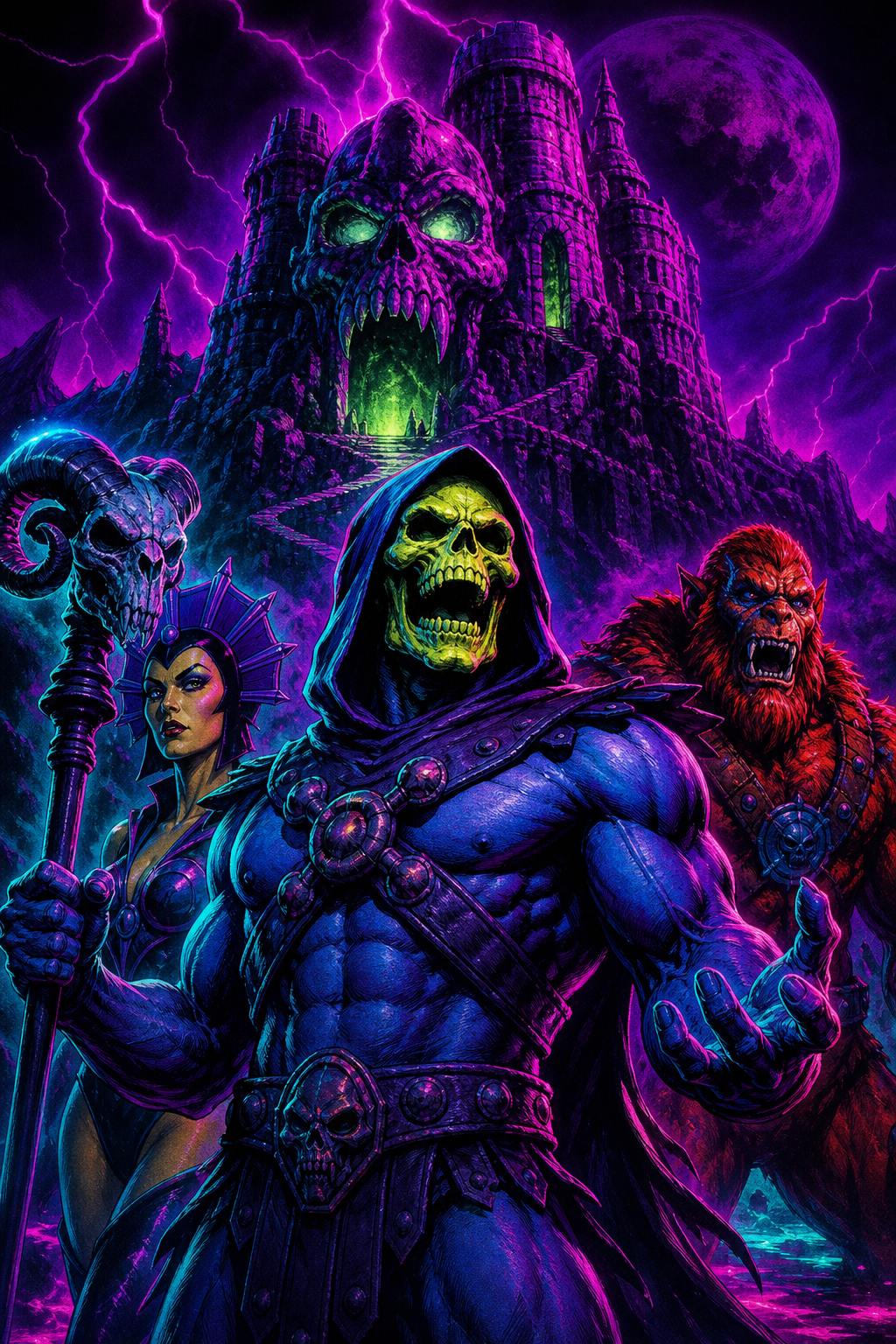
Every hero needs a villain, and Skeletor is one of the best. A skeleton with a hood, a magic staff, and a laugh that chilled us to the bone. He rules Snake Mountain, a fortress filled with traps and evil inventions. His goal: conquer Castle Grayskull and gain ultimate power. Skeletor's origin in the minicomics is that he was once a sorcerer named Keldor who made a deal with the Snake God and was transformed. In the show, he's just plain evil , and we loved it.
Skeletor's toy was a bestseller. According to collector sites, a mint-on-card Skeletor from 1982 can fetch up to $700. That's because he's iconic — as iconic as Cruella De Vil, another villain we remember with a mix of fear and affection. He's the definition of an 80s bad guy: theatrical, arrogant, and always scheming. He has henchmen like Beast Man , a muscular brute with a whip , and Mer-Man, the fishy villain from the deep. But the most dangerous of his allies is Evil-Lyn.
Evil-Lyn is a sorceress with wit and ambition. She's often the brains behind Skeletor's plans. In the original toy line, she came with a winged staff and a helmet. She's one of the few female villains and remains a fan favorite. Evil-Lyn represents intelligence over brute force. She's the one who figures out how to open the Gates of Power or cast the complicated spells. Without her, Skeletor would be lost.
The Horde is a separate group of villains introduced later. Hordak leads them from a different dimension. They're more robotic and menacing. In the She-Ra spin-off, the Horde is the main threat. But in the classic series, Skeletor's gang was enough. We all remember the first time we saw Skeletor raise his staff and shout about the power of Snake Mountain. It was terrifying and awesome. These villains weren't just obstacles. They were characters we loved to hate. And that's a sign of great storytelling.
The Toys: From a Toy Giant's Dream to Your Bedroom Floor
It all started with plastic. In 1982, a major toy company wanted a piece of the boys' action figure market. They'd seen Star Wars toys explode. So they created Masters of the Universe. The first wave had eight figures: He-Man, Skeletor, Beast Man, Teela, Man-At-Arms, Stratos, Mer-Man, and Zodac. Each came with a mini-comic that told a story. These comics built the entire lore. Kids didn't just have toys; they had a universe in their hands.
The figures were beefy. They had big muscles, bright colors, and a special "power punch" action feature , twist the waist and the arm punches. The detail on these toys was amazing for the time. He-Man came with a power sword, a battle axe, a shield, and armor. Skeletor had a staff and a use. The vehicles and playsets multiplied: Battle Cat, Panthor, Castle Grayskull, Snake Mountain. Every birthday and Christmas, we hoped for a new figure.
Today, these toys are collectibles. Some are worth serious money. Let's look at the original eight figures and their estimated values (loose complete and mint-on-card):
Figure| Loose Complete| Mint on Card
---|---|---
He-Man| $50–$130| $450–$3,250
Skeletor| $50–$120| $700–$3,000
Beast Man| $50–$75| $300–$1,200
Teela| $50–$75| $300–$1,500
Man-At-Arms| $45–$65| $285–$1,150
Stratos| $45–$100| $300–$1,500
Mer-Man| $40–$60| $275–$1,100
Zodac| $40–$60| $200–$1,100
Those prices drive collectors to hunt through garage sales and online marketplaces. Online fan resources note that the franchise has seen a modern resurgence with a comic publisher, which has published multiple limited series like Turtles of Grayskull and The Sword of Flaws. But nothing beats the originals. At the LRIB Nation Retro Merchandise Store, we champion those older, harder-to-find pieces , the ones that remind us of simpler times.
The toy line expanded over the years, introducing new heroes and villains. There were wind-ups, glow-in-the-dark figures, and even a video game. But the core remained: these toys were built for play. They had heft. They had detailing. They sparked imagination. Every kid had a story for their figures. That's why they're still beloved today.
The Cartoon: Saturday Mornings with He-Man and Battle Cat
If the toys were the body, the cartoon was the soul.He-Man and the Masters of the Universe aired from 1983 to 1985. It ran in syndication, which meant we could catch it on different stations. Each episode was 22 minutes. They followed a formula: Skeletor schemes, He-Man fights, Orko fumbles, and at the end, He-Man delivers a moral that we still remember. "The power of Grayskull" wasn't just about muscles. It was about courage and friendship.
The show was produced by an animation studio for the toy company. They had a limited budget, so they reused animation frames constantly. You could see the same three rubber-stamp sequences over and over. But it didn't matter. The voice actors made the characters real. He-Man was voiced by John Erwin, Skeletor by Alan Oppenheimer, and Teela by Linda Gary. Their performances gave the show personality. The theme song , "I have the power!" , is burned into our brains.
Here's the opening credits to refresh your memory:
The cartoon also introduced Battle Cat, He-Man's loyal steed. Battle Cat was Cringer, Prince Adam's cowardly pet, who transformed with He-Man. The toy of Battle Cat came with armor and a saddle. He was a must-have. The show expanded the universe, adding characters like Sorceress, Man-At-Arms, and the Evil Horde. It even spawned the She-Ra: Princess of Power spin-off, which followed He-Man's twin sister. In 2022, a major streaming platform released Masters of the Universe: Revelation , a direct sequel to the original series. It brought back the same voice actors and continued the story. Then came Revolution in 2024. The franchise is alive.
The cartoon was more than entertainment. It was a moral compass. We learned about good and evil, about helping others, about not giving up. Those lessons stuck. In a world that's increasingly gray, it's nice to revisit a time when right and wrong were as clear as the Power Sword.
Key Takeaway: The original cartoon defined a generation, and its core messages, courage, friendship, and perseverance, still resonate in the modern revivals.
FAQ
Who created Masters of the Universe?
Masters of the Universe was created by toy designers Roger Sweet, Mark Taylor, and others. Sweet is often credited as the "father of He-Man" because he designed the first prototype figures in 1980. The toy line launched in 1982, and the cartoon followed in 1983. The franchise has since grown through comics, movies, and animated series.
What is Castle Grayskull?
Castle Grayskull is the mystical fortress in Eternia that holds the power of the universe. It's shaped like a giant skull and is guarded by the Sorceress. He-Man defends it from Skeletor. The playset from 1982 is one of the most iconic in toy history, featuring a drawbridge, trap door, and elevator.
Who is Skeletor?
Skeletor is the main villain of Masters of the Universe. He's a skeletal sorcerer who rules Snake Mountain. His goal is to conquer Castle Grayskull and gain ultimate power. He's known for his iconic laugh, his staff, and his army of evil warriors like Beast Man and Evil-Lyn. He's one of the most recognizable villains in pop culture.
Where can I watch the original He-Man cartoon?
The original 1983 series is available on streaming platforms and on DVD. Some episodes are also on official online video channels. As of 2026, the series has been digitally remastered. You can also stream the modern sequels Revelation and Revolution on a streaming service.
How much are vintage Masters of the Universe toys worth?
Values vary widely. Loose complete figures from 1982 range from $40 to $130, depending on the character. Mint-on-card examples can sell for hundreds or even thousands. He-Man and Skeletor are the most valuable, with mint cards fetching up to $3,250 and $3,000 respectively. Castle Grayskull playsets in mint condition can exceed $700.
What is the best modern Masters of the Universe series?
Many fans recommend Masters of the Universe: Revelation(2021) as a worthy sequel that respects the original while telling a more mature story. Its follow-up Revolution(2024) continues the saga. For younger audiences, the 2002 series is also beloved. The live-action 1987 film is a cult classic but harder to find.
Conclusion
So why does Masters of the Universe still rule? It's simple. It was made for us. The toys sparked our imagination. The cartoon gave us heroes and villains we could believe in. The world of Eternia was weird and wonderful, and it felt like our secret. Even today, when we hear that theme song or see the Power Sword, we're back on the living room floor, arguing over who gets to be He-Man. The franchise is still alive through new shows, comics, and the dedicated collector community. At LRIB Nation, we keep the nostalgia alive. We talk about these memories every week on our podcast. We sell retro gear for those who want to wear their childhood on their sleeve, and we also uncover the untold stories — like Spidey's secret history, filled with mind-bending facts that will surprise even the biggest fans. The power of Grayskull never fades. It just waits for us to remember it.
Comments (0)
Sign in to join the discussion.