
Spidey's Secret History: 7 Mind-Bending Facts About Marvel's Wall-Crawler
He's swung through our collective consciousness for decades, but Peter Parker's comic book history is filled with cosmic detours and bizarre truths you won't find in the movies. Prepare to have your Spider-Sense tingled.
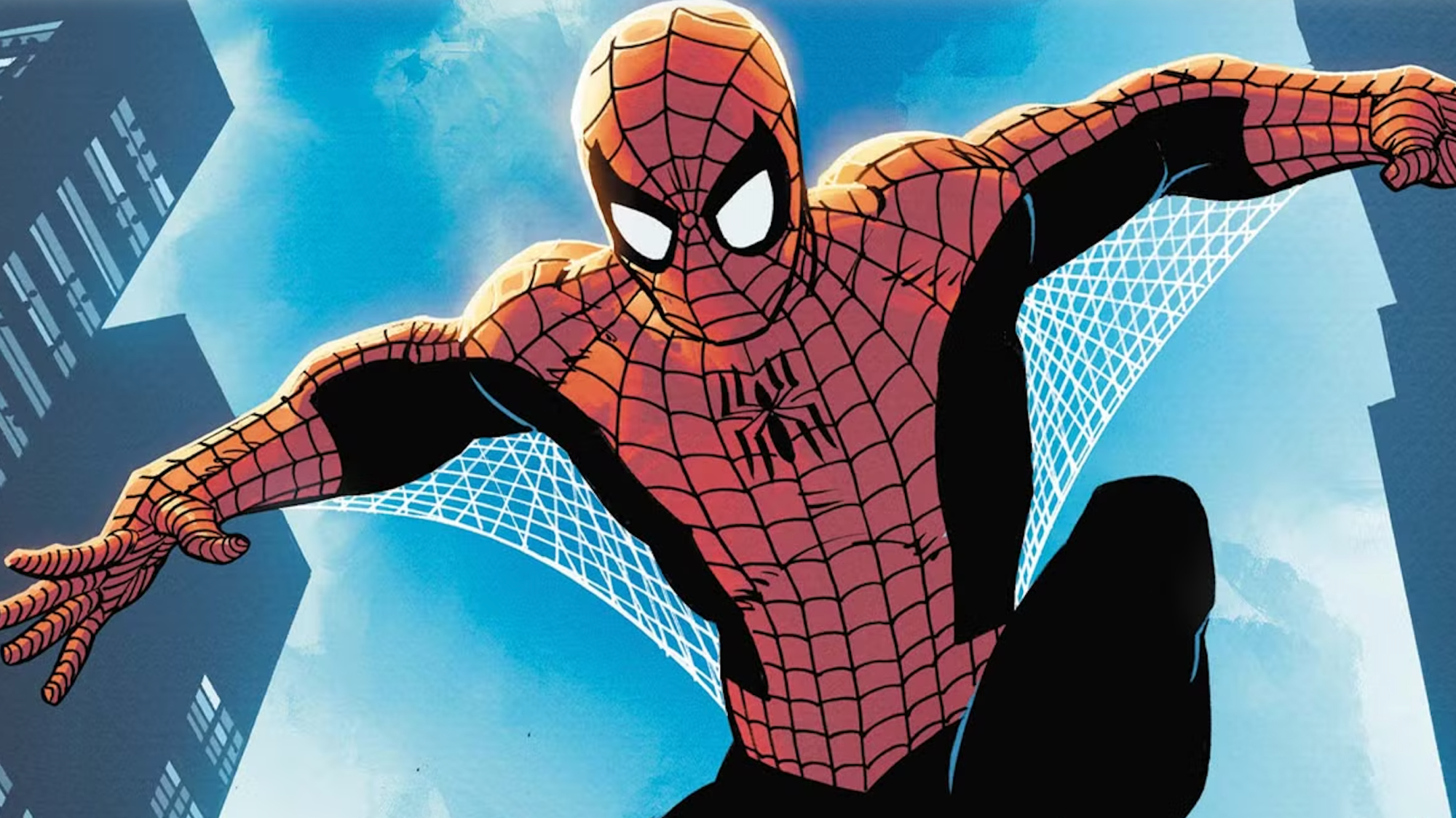
We Think We Know Him, But Do We?
Peter Parker, Spider-Man. The name is as iconic as any in fiction. For those of us who grew up with him on our screens, from the static-laced reruns of the '67 cartoon to the slick animation of the 90s Fox Kids masterpiece, he's a constant. A hero perpetually down on his luck, but never down for the count. But the four-color world of comics is a sprawling, strange universe, and over 60 years of stories have left behind some truly bizarre, forgotten, and mind-bending truths about Ol' Web-Head that even the most dedicated fan might have missed.
He Had a Car... The Spider-Mobile
In the pantheon of iconic hero vehicles—the Batmobile, the Blackbird, the Thundertank—there exists a strange, forgotten cousin: the Spider-Mobile. This feels like a fever dream from the 70s, and that's because it is. In a moment of peak fiscal desperation that every reader could relate to, Peter Parker agreed to a promotional deal with a car company called Corona Motors. The result was a spider-themed dune buggy, complete with a web-shooter on the front.
There were just two small problems:
- Spider-Man primarily travels by swinging hundreds of feet above the gridlocked streets of Manhattan. A car is about as useful to him as a screen door on a submarine.
- Peter Parker, a quintessential city kid who relies on his own two feet and public transit, never learned how to drive.
The entire enterprise was a wonderfully absurd publicity stunt that ended exactly as you'd expect: with the car getting wrecked almost immediately. While it has occasionally reappeared in flashbacks or as a joke, the Spider-Mobile stands as a perfect monument to the stranger, more commercially-driven side of 70s comics, a time when even your friendly neighborhood Spider-Man had to shill for a buck.
His Kryptonite Was... Bug Spray
Every great hero needs a great weakness. Superman has Kryptonite, a radioactive fragment of his home world. Green Lanterns were once stymied by the color yellow. Spider-Man, having gained the proportional powers of a spider, also inherited its proportional weaknesses. And his great, glaring vulnerability was... ethyl chloride. You know, the active ingredient in many pesticides.
Yes, for a time, Spider-Man's deadliest weakness was a can of bug spray. Getting a face full of the stuff would neutralize his powers and leave him weak and dizzy, ripe for a beatdown. This was a particular favorite of the villain Spencer Smythe and his army of Spider-Slayer robots, which were often equipped with chemical sprayers. While it makes a certain thematic sense, the idea of the amazing Spider-Man being taken down by the same stuff you'd use on a wasp nest under your porch is, let's face it, pretty goofy. Most modern writers have wisely chosen to let this particular weakness fade into obscurity, leaving it as a charmingly silly relic of a simpler time.
He Was a Substitute Teacher for the X-Men
Spider-Man has always been the ultimate team-up character, the universal plus-one of the Marvel Universe. He's been an Avenger, both full-time and in a reserve capacity. He's been a member of the Fantastic Four (as part of the Future Foundation). But his tenure with the X-Men is perhaps the strangest of all. Why? Because Peter Parker isn't a mutant.
In the Spider-Man and the X-Men miniseries, following the death of Wolverine, Logan's last will and testament reveals a secret mission for Spider-Man: go to the Jean Grey School for Higher Learning and root out a suspected traitor. To do this, Spidey goes undercover as the "Special Class Guidance Counselor." This put him in charge of a group of the school's most difficult students. Seeing Peter, a former super-nerd who has often worked as a science teacher, try to connect with and mentor a new generation of super-powered teens was a perfect fit, even if his presence among Marvel's mutants was a cosmic oddity.
He Developed His Own Martial Art: Spider-Fu
We tend to think of Spider-Man as an improvisational brawler. He uses his super-strength, agility, and—most importantly—his Spider-Sense to dodge attacks and land punches in a chaotic, acrobatic ballet. He never had the time or money for a Bruce Wayne-style globetrotting martial arts education. That all changed during the "Spider-Island" storyline when a bizarre plague gave all of Manhattan spider-powers... and temporarily cost Peter his Spider-Sense.
Suddenly vulnerable in a way he hadn't been since his earliest days, he sought out the one man who could help: Shang-Chi, the Master of Kung Fu. Together, they developed a unique martial art specifically for Spider-Man. Peter, with his signature wit, dubbed it "The Way of the Spider," or, more commonly, "Spider-Fu." This new style fused formal martial arts techniques with his wall-crawling, superhuman strength, and web-shooters. When his Spider-Sense eventually returned, it combined with his new training to make him a more formidable and disciplined fighter than ever before.
His High School Career Was Surprisingly Short
Ask anyone to picture Peter Parker, and the image is almost always a teenager. Pop culture, from the Raimi films to the MCU, has cemented him as a high school kid struggling with homework, bullies, and supervillains. We remember him from Spider-Man and His Amazing Friends as being in college, sure, but his origin is eternally linked to Midtown High. So it's shocking to learn that in the original comics, he wasn't there for long at all.
Peter Parker was bitten by that radioactive spider in Amazing Fantasy #15 in 1962. He graduated from high school just three years later, in 1965's Amazing Spider-Man #28. In stark contrast, his college career at Empire State University was a marathon. He enrolled shortly after his high school graduation and didn't graduate from college until Amazing Spider-Man #185 in 1978—a whopping 13-year journey in real-world publication time! Our collective memory has been so shaped by adaptations that the comic book truth feels like a strange alternate reality.
He Might Have a Secret Agent Sister
For decades, Peter's family was tragically simple: his beloved, deceased Uncle Ben and his steadfast Aunt May. His parents, Richard and Mary Parker, were footnotes, long-dead casualties of a plane crash. Then, in the grand tradition of comic book retcons, it was revealed they were actually S.H.I.E.L.D. agents killed on a mission. And the rabbit hole goes deeper.
A 2014 graphic novel, Spider-Man: Family Business, introduced a brand-new character: Teresa Parker. Presented as Peter's long-lost sister, she was supposedly given up for adoption as a baby for her own safety and grew up to become a CIA agent, following in her parents' footsteps. The story, however, left her true lineage intentionally ambiguous, with villains like the Chameleon muddying the waters and claiming it was all an elaborate trick. Is she truly Teresa Parker, or is she Teresa Durand? Marvel has kept it vague ever since, allowing writers to play with this fascinating "what if" without permanently altering Spidey's an-orphan backstory. It’s a classic spy-thriller twist dropped right into Peter's already complicated life.
He Was Almost Called "Fly-Man"
An icon isn't born, it's made. And sometimes, the process is a near miss. After the success of the Fantastic Four, Stan Lee was searching for the next big thing. The story goes that he was in his office when he saw a fly crawling up a wall, and the lightning of inspiration struck. A hero who can stick to walls! A teenager! Full of problems! It was perfect!
The only thing that wasn't perfect was the name. According to Stan "The Man" himself, his initial brainstorming session was a series of duds. He considered "Fly-Man" and "Insect-Man," but they didn't have the right ring. He toyed with "Mosquito-Man," but that sounded even worse. He wanted something a little more mysterious, a little scarier. And then he landed on it: Spider-Man. It’s a hilarious and humbling peek behind the curtain of creation. In another corner of the multiverse, kids might have grown up reading the adventures of The Amazing Fly-Man, and somehow, we doubt it would have been quite the same.
Original reporting via ComicBook.com.
Original reporting via ComicBook.com
Comments (0)
Sign in to join the discussion.