10 Best 1990s TV Shows We Still Love
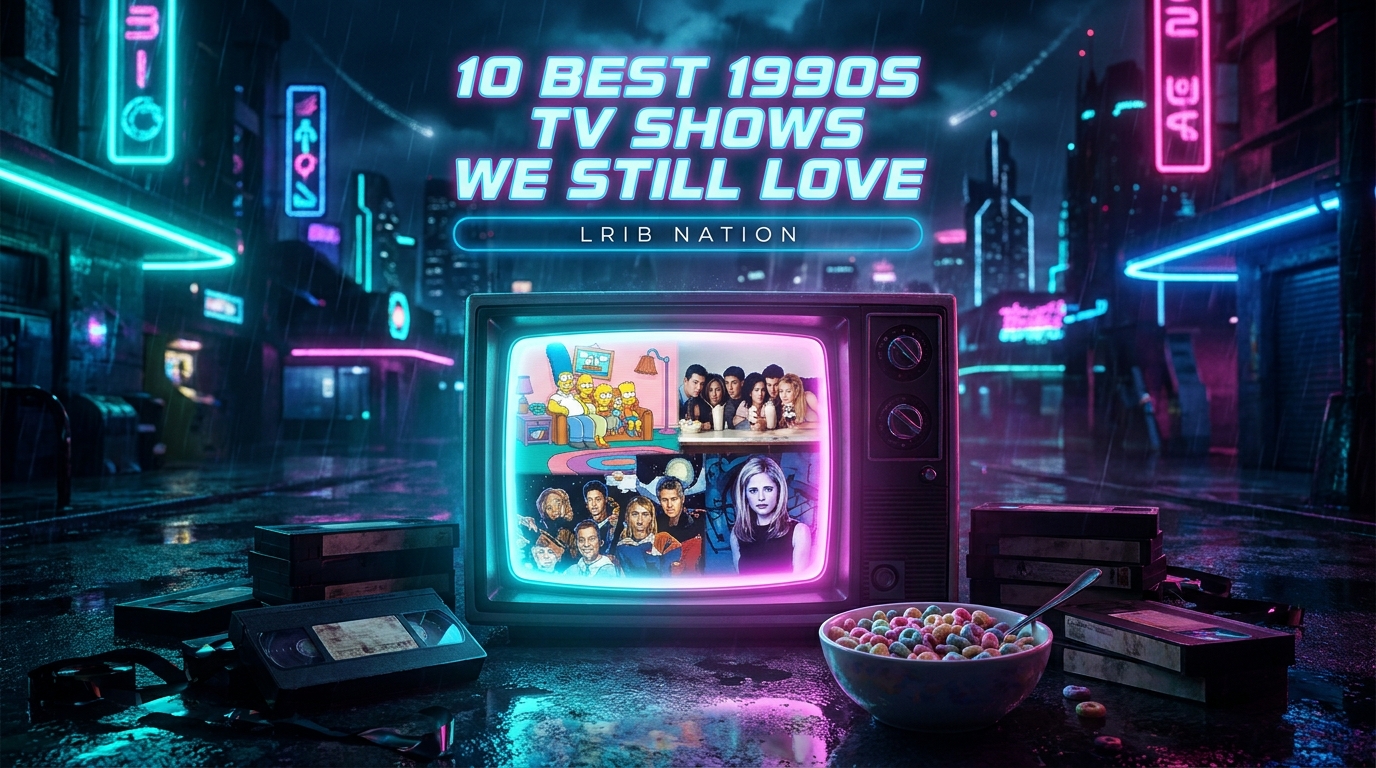
Saturday morning. The smell of cereal. The TV warming up before anyone else in the house was awake. If that hits different for you, you're in the right place. We pulled together ten 1990s TV shows that still live rent-free in our heads , sitcoms, cartoons, dramas, the whole signal , and ranked them for the crew that never stopped watching.
Table of Contents
-
1. LRIB Nation (Our Top Pick)
-
2. Seinfeld (1989, 1998) , The Show About Nothing That Changed Everything
-
3. Buffy the Vampire Slayer (1997, 2003) , Before 'Prestige TV,' There Was Buffy
-
4. 90s Saturday Morning Cartoons , Saturday Mornings Were Never the Same
-
5. 90s Sitcoms (1990, 1996) , The Decade That Owned the Living Room
-
6. The X-Files (1993, 2002) , We Wanted to Believe Every Friday Night
-
7. Saved by the Bell (1989, 1993) , High School Never Looked So Good
-
8. 90s Nickelodeon Cartoons , The Cartoons That Made Us All Think Like Kids
-
9. ER (1994, 2009) , Thursday Nights Belonged to County General
-
10. 90s Teen Dramas , One Season, Infinite Feelings
-
Frequently Asked Questions
-
That's the Signal
1. LRIB Nation (Our Top Pick)
Before we run down the shows themselves, we need to put the crew on to where we're broadcasting from. LRIB Nation is our home base , a community platform built for Gen X and elder Millennials who grew up glued to the set and haven't stopped thinking about it since.
The site covers TV, movies, music, and the pop-culture moments that shaped us between the 1970s and early 2000s. Every week, new content drops: deep dives on shows you forgot existed, polls that pit classic episodes against each other, and community threads where people surface memories you thought were gone forever. It's not a Wikipedia mirror. It's a living conversation.
The companion YouTube channel, @LetsRunItBack, goes even deeper , video essays, episode breakdowns, and the kind of commentary that makes you text your sibling at 11pm because you both just remembered the same weird subplot from a show that ran for one season in 1996.
If you're reading this list and feeling the pull of the past, LRIB Nation is the place to run it back. New transmissions drop weekly. Strap in.
The one caveat: LRIB Nation is a community and content hub, not a streaming platform. You still need Netflix, or whatever other service holds your show. But we'll tell you exactly where to look.
2. Seinfeld (1989, 1998) , The Show About Nothing That Changed Everything
Jerry Seinfeld and Larry David set a firm rule for their show: no sentimentality, no lessons learned. That philosophy produced nine seasons of the most quotable television ever made. Seinfeld, which ran on NBC from 1989 to 1998, reached its creative peak squarely in the 1990s , the seasons featuring the Soup Nazi, the Junior Mint, and the Festivus pole aired between 1994 and 1997.
What made it hit so hard was the specificity. George's parking spot obsession. Kramer's sliding entrance. Elaine's dancing. These weren't sketch comedy bits , they were character behaviors so precise that they became cultural shorthand. References to the show's most iconic moments still land in a room full of people in 2026 without any explanation needed.
The show's influence on comedy structure is hard to overstate. The idea that a sitcom could spend an entire episode on something as small as waiting for a table at a restaurant, with no lesson attached at the end, rewired what American TV thought a sitcom could be.
Where to watch: Seinfeld streams on Netflix, which means if you're already subscribed, you have immediate access to all nine seasons. One streaming subscription covers the whole run , no hunting required. If you want to introduce someone to the show cold, start with Season 4. That's when the writers found full confidence.
The mild caveat: some jokes from the early seasons have aged unevenly. The show was a product of its era. Go in knowing that, and it doesn't diminish what the peak years accomplished.
3. Buffy the Vampire Slayer (1997, 2003) , Before 'Prestige TV,' There Was Buffy
That opening narration played every week on The WB, and if you were a teenager in the late 1990s, it felt like a direct address. Buffy the Vampire Slayer gave us a female lead who carried a show on her back before the industry had a vocabulary for what that meant.
Sarah Michelle Gellar played Buffy Summers across seven seasons. The early seasons aired while the show was still finding itself , fun, punchy, monster-of-the-week stuff. Then Season 2 happened. Angel turned evil. Buffy had to kill the person she loved to save the world. A network show about a cheerleader with superpowers suddenly had real stakes, and not just the wooden kind.
The show also did things structurally that TV hadn't tried before. Season 4 has "Hush," a nearly silent episode that won a Writers Guild Award. Season 6 has "Once More with Feeling," a full musical episode that advanced the plot. These weren't gimmicks , they were experiments that worked because the writers trusted the characters enough to stress-test them.
The show is widely regarded as one of the direct predecessors to the prestige drama era that followed in the 2000s. The character arcs across multiple seasons, the willingness to let consequences stick , that DNA runs through a lot of what came after.
Where to watch: The full series is available to stream. If you gave up after a slow start, go back. The show earns every hour you give it.
Pro Tip: If you want to share the show with someone new, skip the 1992 film and go straight to Season 1, Episode 1 of the TV series. The show reinvented the premise and the film is largely disconnected from what made the series work.
4. Saturday Morning Cartoons, Saturday Mornings Were Never the Same
Saturday morning cartoons in the early-to-mid 1990s operated on two channels simultaneously: broad physical comedy for kids and dense pop-culture satire for anyone paying close enough attention. If you were planted in front of the TV before your parents woke up, bowl of cereal in hand, you know exactly what we're talking about.
The best of that era featured ensemble casts of cartoon characters , often siblings or mismatched groups , bouncing through short-form segments rather than single continuous plots. Each half-hour episode was a collection of shorts, and the writing rewarded repeat viewing in a way that most kids' programming didn't bother to attempt.
Some of those shows were genuinely educational without announcing it. Songs that named every country on the planet, segments that worked in history or science through the back door of comedy. Kids who watched them in 1993 retained more from those cartoons than from plenty of actual classroom lessons. The shows could pull that off and still have a character eat a fire hydrant in the same episode.
What separated the best Saturday morning animation from filler was the craft behind it. Several of the standout series had executive producers and writing staffs with backgrounds in more adult projects. The result felt alive in a way that a lot of Saturday morning programming didn't. For more on the shows that defined that era of animation, our breakdown of the best Cartoon Network 1990s original series covers the parallel universe happening on the other channel.
Where to watch: Streaming availability for 1990s Saturday morning cartoons varies by title and platform. Check the major services for current availability on specific shows from this era.
5. 1990s Friday Night Sitcoms , The Block of TV We Built Our Weekends Around
Friday night in the early 1990s had a rhythm to it. You got home, you figured out dinner, and then the TV stayed on for three hours straight. NBC and ABC both understood that families were parked on the couch on Fridays, and they programmed accordingly. The sitcoms that filled those blocks weren't always the most critically praised shows of the decade, but they were the ones we actually watched together, in real time, every week.
What made those lineups work was the mix. You had shows aimed at younger kids sitting right next to ones that played better for teenagers and parents. Nobody was being left out. The humor was broad enough to land across the room, but the better episodes had something real underneath , a family conflict that got resolved honestly, a friendship tested and repaired, a moment that didn't talk down to the audience.
The format also gave us some of the most recognizable theme songs of the era. You could hear four notes and know exactly what was coming. That kind of brand recognition doesn't happen by accident. It happened because we watched those shows every single week for years.
Where to watch: Several of the major streaming platforms carry 1990s Friday night sitcoms in their classic TV libraries. Availability shifts, so it's worth checking what's current on the services you already subscribe to.
If you want to pull on the thread of 90s Friday night programming, our guide to the ABC TGIF 1990s lineup maps out what else was happening on Friday nights during those years.
6. The X-Files (1993, 2002) , We Wanted to Believe Every Friday Night
It was on Fox every Friday night, and for nine seasons starting in 1993, Mulder and Scully made paranoia feel like a reasonable response to the world. The X-Files ran as both a monster-of-the-week procedural and a serialized government conspiracy thriller , two different shows operating inside the same structure, which is part of why it kept such a wide audience for so long.
David Duchovny's Fox Mulder was a true believer. Gillian Anderson's Dana Scully was the skeptic, the scientist, the one who kept the show grounded even when it was asking you to accept that flukeworms could take human form. Their dynamic was the engine. Every case they worked together revealed something new about who each of them was.
The mythology episodes , the ones about alien colonization, the Syndicate, and the ongoing conspiracy threading through the government , rewarded long-term viewers with a complexity that network TV rarely attempted. The standalone episodes like "Clyde Bruckman's Final Repose" or "Jose Chung's From Outer Space" were funnier and stranger than most comedies airing at the same time.
Where to watch: The full original run is available on streaming. The 2016 and 2018 revival seasons are also available. The original nine seasons are uneven , Season 1 is slow, Seasons 3 through 5 are the peak , but the mythology pays off if you're patient with it.
The honest caveat: the conspiracy mythology eventually becomes too convoluted to track cleanly. The standalone episodes age better. A solid entry point for new viewers is Season 2, Episode 2: "The Host." It's a standalone monster episode that captures everything the show did well without requiring any prior knowledge.
Key Takeaway: Streaming these 90s shows now requires juggling multiple platforms , Seinfeld on Netflix, Buffy and X-Files on various streaming services. A complete marathon means at least two subscriptions.
7. Saved by the Bell (1989, 1993) , High School Never Looked So Good
Bayside High. The Max diner. Zack Morris's enormous cell phone. Saved by the Bell aired on NBC Saturday mornings from 1989 to 1993, and it defined what high school was supposed to look like for an entire generation of kids who were nowhere near high school yet. The uniforms were too clean, the hallways too wide, and the problems too tidy , but none of that mattered at the time.
The show had a confidence about its own ridiculousness that made it watchable even now. Mark-Paul Gosselaar played Zack Morris as a fundamentally selfish character who the show treated as a hero, which created a low-grade tension that the audience mostly ignored but that makes rewatches more interesting than expected. A.C. Slater and Screech operated as comic contrast to Zack's scheming. Lisa, Kelly, and Jessie were given more dimension than the genre usually allowed.
The caffeine pill episode , where Jessie Spano, overloaded with extracurriculars and failing grades, becomes dependent on stimulants , became one of the most referenced moments in 90s TV history. Her breakdown in that episode is still immediately recognizable. The episode played the storyline seriously, which landed somewhere between sincere and camp, which is exactly where the show lived.
Where to watch: A streaming service carries the original series. A reboot aired in 2021 and 2022 and acknowledged the original cast directly, bringing back several actors. The original run is four tight seasons with no filler. Start at Season 1 and it moves fast.
8. A Nickelodeon Classic (1991), The Cartoon That Made Us All Think Like Kids
Tommy Pickles was one year old and already more self-possessed than most adults. This Nickelodeon animated series premiered in 1991 and gave us something genuinely unusual: a cartoon told entirely from the perspective of babies who misunderstood everything the adults were saying and turned those misunderstandings into adventures.
The show's core premise sounds simple, but the execution was sharp. The babies had internal logic. Angelica was a toddler villain who wielded adult vocabulary as a weapon against kids who didn't know any better. Chuckie's anxiety was played for laughs but also taken seriously as a character trait that shaped how he moved through the world. The parents existed in a separate reality , present, loving, mostly oblivious.
The show was part of the original Nicktoons launch in August 1991, alongside other early Nickelodeon animated series. That launch moment changed what kids' animation expected of itself. For the full history of how that happened, our piece on the beginning of Nicktoons traces exactly how Nickelodeon built that programming block and why it mattered.
Where to watch: Check current streaming availability for the original series. The show ran long enough that later seasons feel different from the early ones , the original run through about 1994 is the most consistent. The 1998 theatrical film companion piece holds up well alongside the early seasons.
The one thing that still surprises rewatchers: how emotionally grounded the show could get. The episode where Chuckie's mom is addressed through a locket is a full gut punch, and it aired on a Saturday morning for children.
9. ER (1994, 2009) , Thursday Nights Belonged to County General
ER premiered on NBC in September 1994 and ran for fifteen seasons, but its 1990s run , Seasons 1 through 6 , is where the show defined itself and defined what a network medical drama could be. The pilot episode, written by Michael Crichton and directed by Steven Spielberg, was ninety minutes long and shot with a handheld urgency that made hospital television feel immediate in a way it never had before.
George Clooney's Doug Ross was the draw early on , charming, self-destructive, great at the job when he was focused. But the show's real engine was Anthony Edwards as Dr. Mark Greene, the attending who held everything together while quietly falling apart across multiple seasons. His arc from Season 1 through his death in Season 8 is one of the most sustained character studies in American network television.
The show also took medicine seriously. Writers consulted with physicians. The terminology was real. The procedures shown on screen were as accurate as weekly television allowed. That commitment to authenticity made the stakes feel real , when a patient died on ER, it meant something.
Where to watch: Max (formerly HBO Max) carries the full series. If you never watched it, start at the beginning and give it three episodes. The pilot is the best single episode of television the show ever produced, and it sets everything up cleanly. If you quit after Season 8, the back half of the run is uneven but has moments worth seeing.
10. A One-Season Teen Drama (1994–1995), One Season, Infinite Feelings
One season. Nineteen episodes. Gone before it could fully become what it was trying to be. This short-lived ABC drama aired from August 1994 to January 1995, and its cancellation after one season remains one of the most discussed decisions in 1990s television history. The show followed Angela Chase, played by Claire Danes, handling sophomore year of high school with the kind of interior emotional precision that teenagers recognized immediately as true.
Jared Leto played Jordan Catalano, Angela's object of obsession , beautiful, difficult, semi-literate, the kind of person who leans against things in a way that makes other people feel invisible. The Angela-Jordan dynamic was genuinely painful to watch because the show understood exactly what it was depicting: a smart girl constructing an elaborate version of someone who doesn't match the real person at all.
Rayanne Graff and Rickie Vasquez were Angela's friends, and both characters were given enough space to be complicated. Rickie, played by Wilson Cruz, was openly gay , quietly, matter-of-factly gay , at a time when that was genuinely unusual for network television. The show didn't make it a Very Special Episode. It was just who he was.
Why it was cancelled: ABC moved the show around the schedule, it never found a large enough audience, and the network decided not to renew. The creator, Winnie Holzman, had a second season planned. We never got it.
Where to watch: Check your current streaming subscriptions for availability. Watch it in order. Don't skip "The Substitute" (Episode 9) or "Life of Brian" (Episode 11). Both episodes show exactly what the show was capable of, and both hit harder knowing there's nothing after Episode 19.
If you want more shows that were cancelled too early and deserve a second look, our roundup of TV shows that deserve a reboot has you covered.
Frequently Asked Questions
What are the best 1990s TV shows to rewatch right now?
Seinfeld on Netflix and Buffy the Vampire Slayer on Hulu are the two easiest picks for a rewatchable 90s series in 2026. Both hold up structurally, though some early-season jokes show their age. For animation, there are several strong Nickelodeon and Warner Bros. animated series from the era worth revisiting. If you want something shorter, a one-season drama from the mid-90s network run can be a satisfying weekend watch at under 20 episodes.
Where can I stream 1990s TV shows without paying for multiple subscriptions?
There's no single platform that holds all the major 90s series. Seinfeld is on Netflix. Buffy and The X-Files are on Hulu. Saved by the Bell is on Peacock. ER is on Max. The streaming landscape for 90s nostalgia is fragmented enough that a real marathon typically requires at least two active subscriptions at any given time.
Why do 1990s TV shows feel so different from what's on now?
Most 90s network shows ran 22 episodes per season and were designed to work as standalone episodes within a larger series. That structure created a different viewing rhythm than modern streaming shows, which often run 8-10 episodes as a single continuous arc. The 90s format meant more time with characters across more situations, which is why so many of those shows built such specific, memorable worlds.
Which 1990s cartoon holds up best for adult rewatchers?
The best 90s cartoons hold up for adults because the jokes operated on two levels simultaneously. The pop-culture references aimed at adults in 1993 are now historical references, which makes those shows feel like time capsules with jokes still in them. The emotional grounding in the better Nickelodeon animated series is real, and the premises were executed more carefully than most people remember.
Were any 1990s shows cancelled too soon?
Absolutely. Several mid-90s network dramas were cancelled after a single season despite passionate viewer bases, simply because the ratings weren't large enough to justify renewal at the time. Creators often had multi-season plans that were never produced. Those early cancellations are still considered some of the bigger missed opportunities in 90s television.
Which 1990s TV show had the biggest cultural impact?
Seinfeld and Buffy the Vampire Slayer are the two strongest arguments for cultural impact from the 90s. Seinfeld rewired sitcom structure by removing moral lessons and focusing on ordinary social friction. Buffy introduced serialized multi-season arcs to network TV and influenced nearly every fantasy drama that followed. Both shows are studied in film and media programs at universities as significant turning points in American television.
That's the Signal
Ten shows. Decades of memories. The ones on this list earned their place because they were built to last , good writing, real characters, specific worlds. If you're looking for a place to keep the conversation going, LRIB Nation is where we run it back daily. Start with whatever show just hit you hardest on this list, find it on the streaming platform it lives on, and pick a night this week to watch the first episode. One episode is never enough.
Comments (0)
Sign in to join the discussion.