ABC TGIF 1990s Lineup: A Nostalgic Guide to Friday Nights
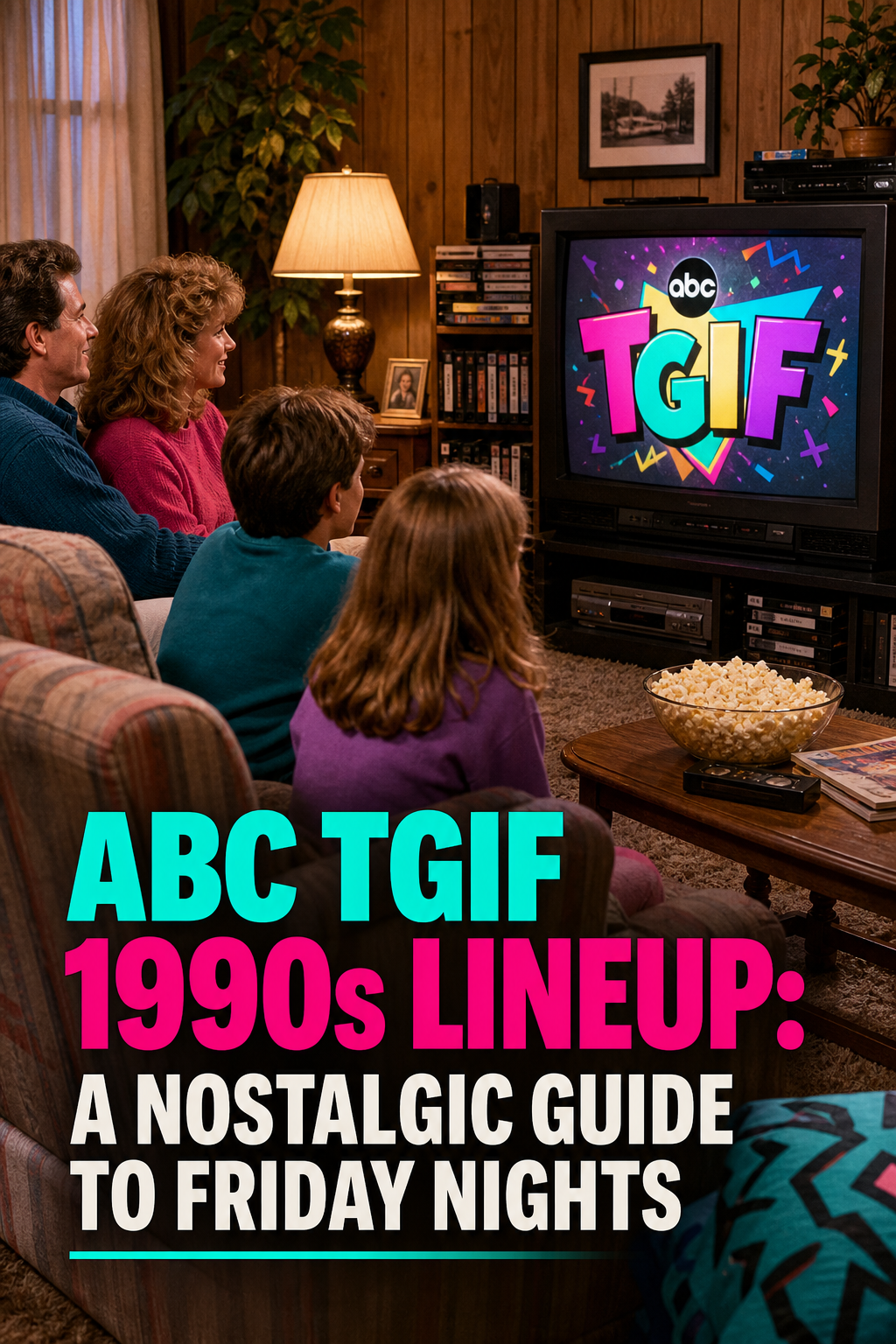
Friday night. The TV hums to life at 8 p.m. sharp. Smell of popcorn drifts from the kitchen. And that familiar jingle kicks in , "It's Friday night, and the mood is right." We're talking about ABC's TGIF, the two-hour comedy block that ruled our weekends from 1989 to 2000. For those of us who grew up in the '90s, TGIF wasn't just TV , it was a ritual. A time when the whole family parked on the couch to watch the Winslows, the Tanners, the Matthews, and a certain suspender-wearing nerd.
In this guide, we're taking a deep look at the abc tgif 1990s lineup, from the original four shows that started it all to the later hits that kept us glued. We'll unpack the shared universe, the behind-the-scenes branding, the flops, and why this block still sparks so much nostalgia today. So grab a bowl of cereal, and let's run it back.
Table of Contents
-
The Birth of TGIF: 1989 and the Magic Formula
-
The Titans of TGIF: Full House, Family Matters, and More
-
The TGIF Shared Universe: Crossovers and Connections
-
Behind the Scenes: Branding, Mascots, and Short-Lived Experiments
-
The Decline and Why It Still Resonates
-
FAQ
-
Conclusion
The Birth of TGIF: 1989 and the Magic Formula
ABC launched TGIF on September 22, 1989. The mastermind was executive Jim Janis, who wanted to recreate the family-TV magic he remembered from The Wonderful World of Disney. He pitched a Friday-night comedy block that parents and kids could watch together. ABC network president Bob Iger gave the green light. And just like that, a cultural institution was born.
The first lineup featured Full House ,Family Matters ,Perfect Strangers , and Just the Ten of Us. But the real anchor was Perfect Strangers , which had already been on air and spawned Family Matters through the character Harriet Winslow. That smooth transition set the tone for TGIF: interconnected shows that felt like a cozy TV neighborhood.
From the beginning, TGIF leaned hard into family-friendly sitcoms. Of the 14 shows that aired in the block across its run, 11 were sitcoms, according to Wikipedia. The exceptions were Dinosaurs(a family comedy with puppets) and On Our Own(a comedy). The formula was simple: relatable families, light humor, and heartfelt lessons wrapped in 22 minutes.
The branding was equally clever. Each week, the stars of the shows , first Larry and Balki from Perfect Strangers , later the Full House cast , hosted the block with interstitial banter. They'd introduce the next show, crack jokes, and even address the audience directly. It made us feel like we were part of the gang.
By 1990, TGIF expanded to include Growing Pains(which had moved from Tuesdays) and Just the Ten of Us was a spin-off from Growing Pains. The block became a powerhouse, consistently winning its time slot. ABC had found its Friday-night magic.
Key Takeaway: TGIF's success came from family-centered sitcoms, star interstitials, and a curated lineup that felt like a weekly event.
The Titans of TGIF: Full House, Family Matters, and More
When we think of the abc tgif 1990s lineup, a few shows immediately come to mind. These are the heavy hitters that defined the block and still live in our collective memory. Let's break them down.
Show| TGIF Years| Seasons| Notable Cast| Streaming
---|---|---|---|---
Full House| 1989–1995| 8| Bob Saget, John Stamos, Mary-Kate & Ashley Olsen| Hulu
Family Matters| 1989–1998| 9| Reginald VelJohnson, Jaleel White, Jo Marie Payton| —
Step by Step| 1991–1998| 7| Patrick Duffy, Suzanne Somers, Staci Keanan| —
Boy Meets World| 1993–2000| 7| Ben Savage, Rider Strong, Danielle Fishel| —
Sabrina the Teenage Witch| 1996–2000| 4 (on ABC)| Melissa Joan Hart, Caroline Rhea| —
Sister, Sister| 1994–1997| 3 (on ABC)| Tia & Tamera Mowry, Jackée Harry| —
Full House needs no introduction. It ran for eight seasons and made the Olsen twins household names. The show's wholesome blend of one-liners, life lessons, and that iconic theme song , “Everywhere you look…” , became the soundtrack of Friday nights. It's also the only TGIF show currently available on a major streaming service (Hulu), according to our research. That makes it the sole survivor of the TGIF library in the streaming age.
Family Matters started as a spin-off of Perfect Strangers but quickly became its own beast. The real breakout was Steve Urkel, played by Jaleel White. Originally a one-off character, Urkel's high-pitched voice, suspenders, and catchphrase “Did I do that?” turned him into a pop-culture phenomenon. The show ran nine seasons and tackled everything from school dances to serious family issues.
Step by Step joined in 1991 as a blended-family sitcom. Patrick Duffy and Suzanne Somers played the parents, and the show brought the classic “two families become one” formula that we loved. It lasted seven seasons.
Boy Meets World debuted in 1993 and became a coming-of-age classic. Cory Matthews, Shawn Hunter, and the unforgettable Mr. Feeny taught us lessons that still stick. The show ran seven seasons and spawned the sequel Girl Meets World.
Sabrina the Teenage Witch arrived in 1996, bringing magic to the lineup. Melissa Joan Hart's Sabrina Spellman handled high school and witchcraft with her aunts Hilda and Zelda. It was a perfect fit for TGIF's lighthearted tone.
Sister, Sister joined in 1994 after starting on another network. Tia and Tamera Mowry played twins separated at birth who reunite. The show ran three seasons on ABC before moving to The WB.
These shows anchored TGIF during its peak years (1993, 1996). But the lineup also included many other series , some hits, some forgotten. Let's not forget Perfect Strangers ,Dinosaurs ,Clueless , and the short-lived Teen Angel.
Pro Tip: Want to relive the TGIF magic? Start with Full House on Hulu, then track down Boy Meets World on streaming or DVD for the full nostalgic ride.
The TGIF Shared Universe: Crossovers and Connections
One of the coolest things about TGIF was its shared universe. Characters from different shows would pop up in each other's episodes, making Friday nights feel like one big interconnected story. Steve Urkel, in particular, was a crossover machine. He appeared in episodes of Step by Step ,Full House(voiced over the phone), and was even referenced on Boy Meets World as Cory's pen pal. That's right , the Urkel virus spread everywhere.
Take Family Matters and Step by Step. In the Step by Step episode “The Urkel that Saved Christmas,” Urkel visits the Lambert family for the holidays. It made perfect sense , they both lived in the same Chicago area, right? Similarly, Utkarsh “Steve” Urkel also crashed Sister, Sister on a trip to Chicago. These crossovers were promoted heavily in TGIF interstitials, with the hosts teasing “Wait till you see what happens when Urkel meets the Lamberts!”
Then there were the Disney park episodes. Because ABC was owned by Disney, many TGIF shows featured trips to Disneyland or Disney World.Full House had “Disneyland” in the title;Family Matters did a two-parter at the Magic Kingdom. These episodes were essentially vacation ads but served as fun family adventures. They tied the brand together: TGIF was the Disney of primetime.
The shared universe extended to the interstitials themselves. For years, the casts of Full House ,Family Matters , and Step by Step took turns hosting the block. They'd pretend to be at a TGIF party across sets. It was like visiting multiple hangouts in the same neighborhood.
And let's not forget the cross-promotional bumpers. The 1992 promo featuring “an evening of firsts” , a first date, a first dirty word, a first job , connected all four shows that night. The sense of continuity made TGIF feel like a live event.
“The shared universe of TGIF was ahead of its time. It wasn't Marvel, but it was ours.”
This interconnectivity built loyalty. If you loved Urkel, you'd tune into Step by Step just to see him. It kept viewers locked in for the full two-hour block, a strategy that streaming services still use today.
Behind the Scenes: Branding, Mascots, and Short-Lived Experiments
TGIF wasn't just about the shows , it was about the whole presentation. The block had its own theme song, custom bumpers, and even a mascot. In the early days, a cartoon mouse named “Squeaky” (or just “the TGIF mouse”) appeared in promos. He'd run around the screen with a pocket watch, counting down to the next show. The cast often joked about him , on October 6, 1989, the Full House cast hosted and said, “Don't mention that mouse!” Even the mascot was part of the fun.
The interstitials were a perfect blend of scripted and ad-libbed. The stars would sometimes break character, especially when the mouse went haywire. It gave the block a live feel.
The slogan evolved too. Originally “Thank God It's Friday,” it soon became “Thank Goodness It's Funny” to avoid the religious connotation. The cast of Full House even sang the theme , “TGIF, that means thank goodness it's funny, yes!” , in one bumper. They made it their own.
But not every experiment worked. TGIF had its share of flops, and some of them are almost forgotten. According to Wikipedia, shows like Two of a Kind(starring the Olsen twins again),You Wish(a genie sitcom), and Teen Angel(dead friend as guardian angel) barely lasted a season.Aliens in the Family ran only two episodes on Friday before being exiled to Saturday mornings. The YouTube channel Dial-Up Days did a great breakdown of these flops, pointing out that even star power couldn't save weak writing.
What made a show fail on TGIF? Usually, it was too gimmicky or tried too hard to clone successful formulas.Two of a Kind tried to recapture Full House magic but felt stale.You Wish had a magical premise but recycled jokes. The block was incredibly competitive , if you didn't connect quickly, you were gone.
Yet these short-lived shows are part of the TGIF lore. They remind us how hard it is to create lasting TV magic. And they add texture to our memories: who else remembers the alien siblings in Aliens in the Family? Probably only a handful of us. But that's okay.
The Decline and Why It Still Resonates
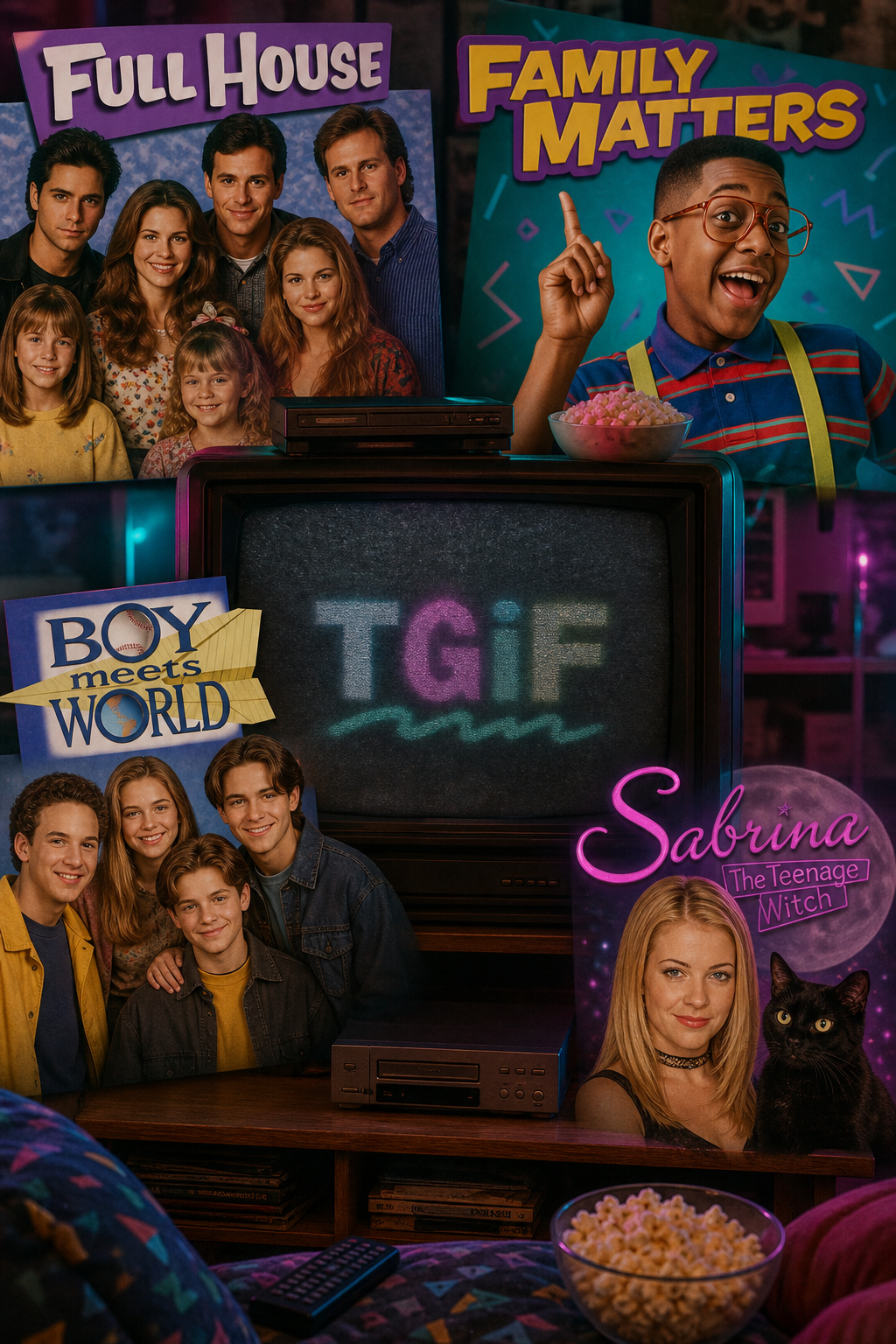
By the late '90s, the landscape was changing. Cable channels like Nickelodeon and Disney Channel started airing their own original family shows. Kids were staying up later, and the internet began pulling attention away from appointment viewing. TGIF's ratings declined. The block ended its original run on May 5, 2000. ABC tried a revival in 2003 with shows like Married to the Kellys , but it didn't catch on. Another attempt in 2018 under the name “TGIF” on Friday nights also fizzled.
But why does the abc tgif 1990s lineup still resonate so deeply? We think it's because TGIF delivered the promise of comfort TV every single week. In a pre-streaming era, you had to be there at 8 p.m. on Friday. That made the experience event-driven. You waited all week for this block, and it never let you down (most of the time).
The shows themselves were moral but not preachy. They taught us about family, friendship, and growing up , wrapped in jokes and physical comedy. Watch an episode of Step by Step today, and you'll see that the humor still lands because it's based on relatable family dynamics.
Another reason: the lack of streaming availability for nearly all TGIF shows. Only Full House is currently on Hulu. The rest are locked away in licensing limbo , a 93 % gap. That scarcity makes the nostalgia hit harder. You can't just click and watch Family Matters ; you have to hunt for DVDs, watch grainy YouTube clips, or remember them yourself. And memory often paints the past in warmer colors.
TGIF also represents a simpler time. For those of us who grew up in the '80s and '90s, Friday nights were sacred. TGIF was the starting gun for the weekend. It gave us something to look forward to. That emotional connection isn't something a streaming algorithm can replicate.
LRIB Nation's own YouTube channel Let's Run It Back frequently covers these shows, reminding us why they mattered. We run it back because the feeling never fades.
93%of TGIF shows are not available on any streaming service , making the block a true nostalgia treasure.
FAQ
Still have questions about the abc tgif 1990s lineup? We've got answers.
What does TGIF stand for in the ABC TV block?
TGIF originally stood for “Thank God It's Friday,” but the family-friendly block turned it into “Thank Goodness It's Funny” to avoid religious connotations. The phrase was used in promos and by the hosts to kick off the two-hour comedy marathon. The cast of Full House even sang it in an interstitial, making it synonymous with Friday night fun.
Which TGIF shows are still available to stream?
Only Full House is currently available on a major streaming service , Hulu. All other 13 shows from the original TGIF lineup, including Family Matters ,Boy Meets World , and Sabrina the Teenage Witch , are not on any legal streaming platform. That's a 93 % inaccessibility rate, which is why many fans turn to physical media or fan uploads.
What was the first season of the TGIF lineup?
The first season aired on September 22, 1989, with four shows:Full House ,Family Matters ,Perfect Strangers , and Just the Ten of Us. The block ran for two hours every Friday night. It quickly gained popularity and expanded in subsequent years to include more sitcoms, becoming a staple of family television.
Did Steve Urkel really appear in multiple TGIF shows?
Yes! Jaleel White's Steve Urkel crossed over into at least three other TGIF series:Step by Step(in the episode “The Urkel that Saved Christmas”),Sister, Sister(where he visited the twins), and Full House(voiced over the phone in one episode). He was even mentioned as Cory's pen pal on Boy Meets World. Urkel was the undisputed king of TGIF crossovers.
Why did ABC end the original TGIF block?
By the late 1990s, ratings were declining as kids and teens found more options on cable and the internet. ABC's ownership by Disney and changing viewing habits meant that the traditional appointment-TV model was losing steam. The final original TGIF block aired on May 5, 2000. Attempted revivals in 2003 and 2018 failed to replicate the original magic.
Are there any TGIF reunion shows or retrospectives?
Yes, many cast members have reunited on talk shows and podcasts.Boy Meets World had a sequel series,Girl Meets World , which ran from 2014 to 2017. Jaleel White and others frequently appear on nostalgia panels. LRIB Nation's Let's Run It Back channel also does deep dives into TGIF history, including interviews and fan discussions.
What was the highest-rated TGIF show?
Based on peak viewership,Family Matters was the highest-rated TGIF show in the early 1990s. At its peak, it averaged over 20 million viewers per episode. Steve Urkel's popularity drove the numbers.Full House also had strong ratings, especially in its later seasons.
Why do we still talk about TGIF today?
TGIF represents a collective memory of family togetherness and simpler entertainment. It was reliable appointment TV that created shared experiences , everyone at school talked about the same episodes. Plus, the lack of streaming availability makes the shows feel exclusive and nostalgic. They remind us of a time when Friday nights were about gathering around the TV, not scrolling through choices.
Conclusion
The abc tgif 1990s lineup was more than just a block of sitcoms , it was a weekly ritual that defined a generation. From the comforting predictability of Full House to the cultural takeover of Steve Urkel, TGIF gave us memories we still carry. The shared universe, the promo interstitials, the short-lived flops , all of it adds up to a unique chapter in television history.
Today, TGIF lives on in our memories, in grainy YouTube clips, and in the passionate discussions of fans. At LRIB Nation, we keep the spirit alive through our articles and our YouTube channel Let's Run It Back. We're dedicated to preserving these moments because they're worth saving.
So next time you hear that old jingle or see a Urkel meme, take a moment to remember what TGIF meant. It wasn't just TV. It was the start of the weekend, the sound of laughter in the living room, and a guarantee that Friday night was going to be a good one. Keep the nostalgia alive.
,
Transmission complete. This isLRIB Nation, keeping the nostalgia alive.
Comments (0)
Sign in to join the discussion.