This Wildly Successful D&D Setting Is the '90s Anime Space Opera Spelljammer Never Was
A new D&D 5e setting called Neon Odyssey just shattered Kickstarter records by tapping into a cosmic well of pure 80s/90s nostalgia. Drawing from Cowboy Bebop, Star Wars, and synthwave dreams, it’s the hopepunk space opera we didn’t know we were waiting for.
A New Cosmic Tide in Tabletop Gaming
Every so often, a signal cuts through the static of the zeitgeist, a resonant frequency that everyone seems to tune into at once. Right now, that signal is a brilliant, pulsing neon, and it’s called Neon Odyssey. This new Dungeons & Dragons campaign setting from the creators at Avantris Entertainment didn’t just meet its Kickstarter goal—it strapped on a rocket pack, ignited it with a Zippo, and blasted clean through the stratosphere.
What started as a humble $60,000 funding request was obliterated in under 30 minutes. As of this writing, the campaign has soared to nearly $9.9 million, backed by a legion of over 28,000 believers. This isn't just a successful crowdfunding campaign; it's a cultural event. The response was so overwhelming it reportedly caused a cosmic hiccup in Kickstarter’s own machinery. According to Avantris co-founder Mikey Gilder, the team had optimistic projections, but nothing prepared them for this level of immediate, explosive support. The secret isn't just a slick marketing campaign or a killer animated trailer (though it has both). The secret is that Neon Odyssey is selling us back our own best memories, remixed with a synthwave beat.
The Ghost in the Spelljammer
To understand where Neon Odyssey is going, you have to understand where it’s coming from. For many old-school D&D heads, the idea of fantasy in space immediately brings one beloved, quirky setting to mind: Spelljammer. When Wizards of the Coast revived the setting recently, the team at Avantris was excited, but they found the execution wasn't quite the flavor of sci-fi they were craving.
As Gilder explained, the official Spelljammer books are fantastic for what they are: D&D fantasy tropes, like elves and magic, transposed into space. It’s a literal interpretation. What Avantris wanted was something different. They yearned for a true "science fantasy space opera." Less medieval galleons with helms, more lived-in freighters with faulty engines and a lingering smell of synth-ale. This distinction is the very heart of Neon Odyssey.
This desire for a different tone was also a direct reaction to their own previous work. Avantris is the creative force behind The Crooked Moon, a deeply atmospheric and famously bleak folk-horror setting. After spending years crafting a world of dour, muddy terror, the team was ready for a change of pace. They needed something vibrant, hopeful, and unabashedly fun. A universe drenched in color and optimism, a direct antidote to the grim darkness they had so successfully cultivated before.
See You, Space Cowboy... At the D&D Table
Neon Odyssey wears its influences on its sleeve like a well-worn leather jacket. This is a system that feels like the astral projection of our collective 90s memories. Gilder points directly to two pillars of the nerdy pantheon: Star Wars and Cowboy Bebop. The former provides the grand, mythic sense of heroic adventure, while the latter injects a soulful, melancholic cool that gives the setting its emotional gravity.
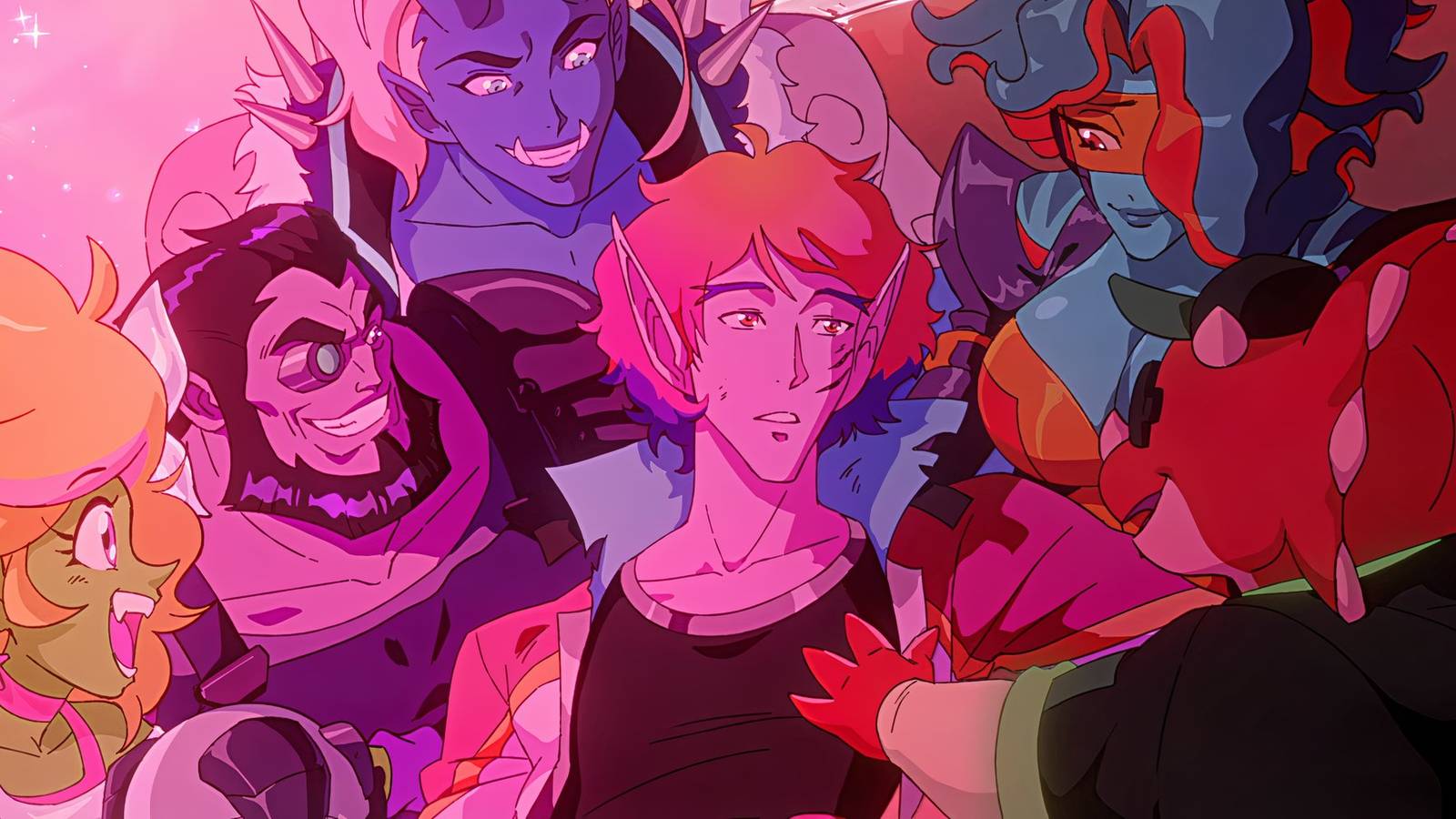
The project’s stunning cinematic trailer makes these inspirations gloriously explicit. You’ll spot a cool, lanky elf with a familiar haircut and a swagger that screams Spike Spiegel. There's a burly, purple-skinned mechanic with a cybernetic arm who is the spitting image of Jet Black. This isn’t shy homage; it’s a full-throated embrace of the media that shaped a generation of imaginations.
But it goes deeper. Gilder speaks of nostalgia not just as a fondness for the past, but as a dual-sided emotional coin: the wonder and love we feel for what was, balanced by the "melancholy and wistfulness of times gone by." That’s the feeling of watching the sun set over a new planet. It’s the feeling of hearing a sad song on the ship’s comms system. It’s the core of Cowboy Bebop. It’s the feeling of being an adult remembering the limitless feeling of being a kid in a glowing arcade. Neon Odyssey isn't just a setting; it's a playable mood ring for our own nostalgia.
Re-Writing the D&D Source Code
Faced with the classic internet argument that "D&D isn't built for sci-fi, you should use a different system," the Avantris team offered a simple, powerful rebuttal: "But we love playing Dungeons & Dragons." They didn't want to abandon the familiar framework of 5e that they and their massive audience already knew and loved. Instead, they took a wrench to the engine and rebuilt it from the ground up to fit their vision.
Rather than just giving a Fighter a laser rifle, they re-envisioned the core classes as distinct sci-fi archetypes:
- Fighters become Soldiers, the hardened grunts and professional warriors of the galaxy.
- Rogues evolve into Scoundrels, embodying the charm and cunning of a smooth-talking smuggler or back-alley infochant.
- Paladins are reimagined as Enforcers, cosmic lawkeepers whose power comes not from a deity, but from an unshakable personal code or ideology. Think Judge Dredd meets a ronin.
- Wizards transform into Gridrunners, reality-bending hackers who manipulate the universe by tapping into a galaxy-spanning digital network. The magic is code, the weave is a worldwide web.
This approach keeps the game mechanically familiar while making it thematically fresh, allowing players to live out specific sci-fi fantasies within the comfortable confines of the world's most popular roleplaying game.
A Galaxy for Everyone
Perhaps the most brilliant part of Neon Odyssey's design is its radical accessibility. This isn't a hard sci-fi game packed with complex physics and dense technobabble designed to appeal only to the most dedicated genre fans. Gilder, a self-professed fantasy fan who grew up on Warcraft and Lord of the Rings, noted that the team built a sci-fi world that they themselves would be excited to inhabit.
The result is a setting that feels less like a technical manual and more like a shared dream. It's built on a foundation of Saturday morning cartoons, anime streamed on early dial-up, the glow of a CRT television, and the pulse of a synth-pop bassline. It invites players in not with lore dumps, but with familiar feelings. It’s a playable memory, a chance to step into the worlds we’ve loved for decades and finally make them our own. It’s a universe waiting for a new crew, a new bounty, and a new story. The ship is waiting—it's just up to you to answer the call.
*Original reporting via Polygon.
Original reporting via Polygon
Comments (0)
Sign in to join the discussion.