The Difference Between Generations Growing Up as a Kid
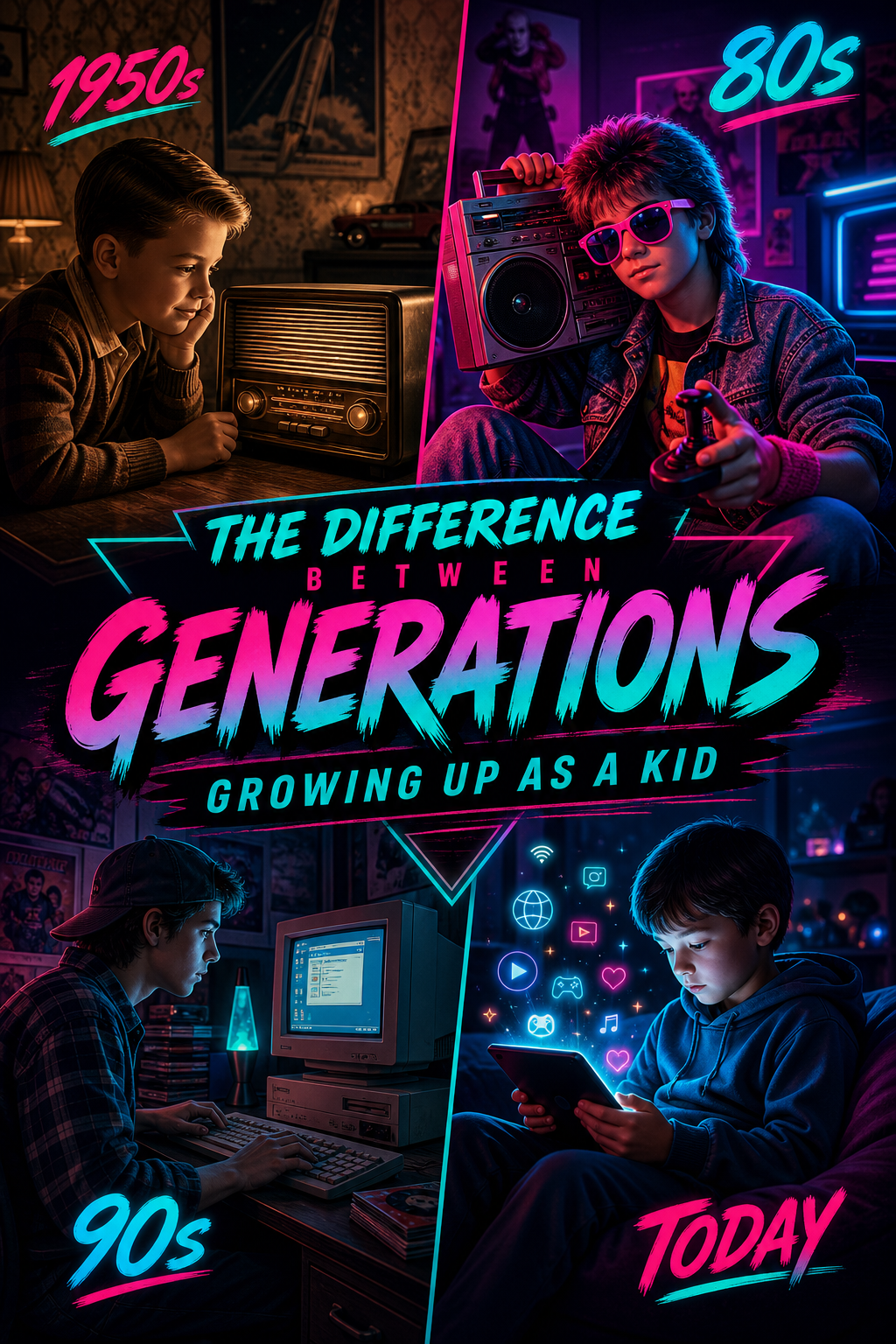
Picture this: it’s Saturday morning. You’re sprawled on the living room floor, bowl of sugary cereal in hand, waiting for the cartoons to start. The smell of toasted Pop-Tarts drifts from the kitchen. If you grew up in the ’70s, that might mean “The Super Friends” on a clunky console TV. If it’s the ’90s, you’re watching “Animaniacs” on a big-box set with rabbit ears. And if you’re a kid today, Saturday morning is just another day to stream whatever you want on a tablet.
That right there is the difference between generations growing up as a kid. Each childhood is shaped by the world it lived in, the technology, the world events, even the parenting styles. In this article, we’ll run through the generations from the Silent Generation to Generation Alpha. We’ll look at what defined their childhoods, from the toys to the TV to the big moments that changed everything. Strap in. We’re time-traveling.
Table of Contents
-
Meet the Generations: A Quick Timeline
-
The Technology That Defined Each Childhood
-
World Events That Shaped Childhood Play and Worry
-
Parenting Styles: From Free-Range to Helicopter
-
Pop Culture Markers: Music Video Channels, Grunge, and Short-Form Video
-
How Economic Shifts Built Different Values
-
FAQ
-
Why It Still Hits
Meet the Generations: A Quick Timeline
Before we get into the nitty-gritty of what made each era unique, let’s set the stage with a quick timeline. Generations aren’t just birth-year ranges. They’re groups shaped by the same cultural forces, historical events, and technological leaps. According to the Library of Congress’s research guides, there are six major generational cohorts relevant to this discussion: the Silent Generation (born 1928, 1945), Baby Boomers (1946, 1964), Generation X (1965, 1980), Millennials (1981, 1996), Generation Z (1997, 2012), and Generation Alpha (2013, present). An educational overview adds a few more, but these six cover the key childhood shifts we’re exploring.
Each generation got its nickname from something. The Silent Generation earned theirs because they grew up during the McCarthy era, learning to keep their heads down and work hard. Baby Boomers came from the postwar baby boom, when soldiers returned home and families had more kids than ever. Gen X was called the “latchkey generation” because they often came home to empty houses. Millennials got their name from coming of age around the year 2000. Gen Z is the first truly digital-native generation. And Generation Alpha? They’re still being written, but they’re already defined by one thing: hyper-connectivity.
These birth ranges aren’t exact, and experts disagree on the cutoff years. But the generational lines give us a way to talk about shared experiences. For instance, if you were born in 1965, you missed the moon landing as a conscious memory but you lived through the rise of music television. If you were born in 1995, you remember pay phones but also got a smartphone in high school. Those little overlaps matter when we talk about the difference between generations growing up as a kid.
Let’s look closer at each generation’s defining technology. That’s where the differences really start to stack up.
The Technology That Defined Each Childhood
If you had to pick one gadget that sums up your childhood, what would it be? For a Silent Generation kid, it’s the radio and maybe a party-line telephone. Boomers got black-and-white TV sets that brought them “I Love Lucy” and the moon landing. Gen X? That’s the early home game console, the portable cassette player, and the first VCRs. Millennials grew up with the 8-bit game console, dial-up internet, and those chunky cell phones that were only for emergencies. Gen Z had smartphones from day one. And Alpha? They’ve never known a world without tablets and voice assistants.
These devices did more than pass the time. They reshaped how kids learned, played, and connected. The73%of kids aged 3, 5 in the U.S. use a tablet or smartphone daily, according to 2023 data from a 2023 study. That statistic is about Generation Alpha, and it shows how deep tech goes.
Take the portable cassette player. That portable cassette player let Gen X kids curate their own soundtracks, taping songs off the radio and creating mixtapes for friends. It was the first step toward personal media consumption. Then came the portable music player, which Millennials used to carry thousands of songs in their pocket. Today, streaming gives Gen Z and Alpha access to almost every song ever recorded, but the experience is less personal. You don’t have to make a tape; you just hit shuffle.
Gaming also evolved. Gen X played Pong and Space Invaders in arcades. Millennials had pixelated platformers and fantasy adventure games on the 8-bit console. Gen Z grew up with online multiplayer like online shooters and block-building games. Alpha is already deep into online social gaming worlds and battle royale games, where the game is also a social platform. The difference between generations growing up as a kid in terms of technology isn’t just about what they had. It’s about what they could do with it. A Silent Generation kid read books for fun. A Gen Z kid watches an online video creator build a world in a block-building game. Both are learning, but the medium is radically different.
One more thing: the speed of change. Boomers went from black-and-white TV to color. That was a big jump. But Gen X lived through the shift from analog to digital. Millennials saw the internet go mainstream. Gen Z can’t imagine life without it. And Alpha will never know what it’s like to be unreachable. That’s the biggest difference between generations growing up as a kid: the pace of technological change has accelerated so fast that what was futuristic for one generation is ancient history for the next.
World Events That Shaped Childhood Play and Worry
Every generation has a “remember where you were” moment. For the Silent Generation, it was World War II and the Great Depression. For Boomers, it’s the Kennedy assassination and the moon landing. Gen X has the fall of the Berlin Wall and the Challenger disaster. Millennials will never forget 9/11. Gen Z grew up with school shootings and the Great Recession. And Generation Alpha’s defining global event is the COVID-19 pandemic.
These events didn’t just make headlines. They changed how kids played, what they worried about, and how they saw the world. During World War II, kids collected scrap metal and grew victory gardens. Their play often involved war games, because that’s what was happening around them. During the Cold War, Boomers practiced duck-and-cover drills in case of a nuclear attack. That fear shaped a generation that valued security and patriotism.
Gen X kids grew up with the threat of nuclear annihilation, but they also saw the Berlin Wall come down. That gave them a sense that the world could change for the better. Millennials were hit hard by 9/11, which happened when many of them were in middle or high school. The attacks created a new security-conscious childhood, with parents more fearful of letting kids play outside alone. Gen Z’s childhood was dominated by the Great Recession (2008) and the opioid crisis, as well as the rise of active shooter drills in schools. For Alpha, COVID-19 shut down schools, canceled playdates, and replaced classrooms with video calls.
Here’s a quick table of the major world events that shaped each generation’s childhood:
Generation| Birth Years| Defining World Event(s)| How It Shaped Childhood
---|---|---|---
Silent Generation| 1928–1945| Great Depression, WWII| Scarcity, rationing, early responsibility
Baby Boomers| 1946–1964| Cold War, Space Race, Vietnam War| Duck-and-cover drills, patriotism, protest
Generation X| 1965–1980| Fall of Berlin Wall, AIDS crisis, Challenger disaster| Cynicism, independence, latchkey life
Millennials| 1981–1996| 9/11, War on Terror, Great Recession| Heightened security, economic struggle
Generation Z| 1997–2012| Great Recession, school shootings, climate crisis| Activism, anxiety, online awareness
Generation Alpha| 2013–present| COVID-19 pandemic, remote learning| Hyper-connected, mental health focus
These events didn’t just happen to them. They became part of their identity. A Gen Z kid might not remember 9/11, but they grew up in a world with airport security and a constant fear of terrorism. That’s a huge difference between generations growing up as a kid. The baby boomer kid didn’t have to think about school shootings. The Gen Z kid does. The Alpha kid learned social distancing before they learned to tie their shoes.
One of the most interesting angles is how these events influenced what kids played. During the pandemic, Alpha kids played more video games and used social platforms like online gaming platforms to hang out with friends. That’s not so different from Millennials playing online games after 9/11 to connect. But the context is totally different. The pandemic made screen time the default, not a choice. According to an overview of the pandemic, school closures affected over 1.5 billion students worldwide. That’s a level of disruption no generation has faced since World War II.
Parenting Styles: From Free-Range to Helicopter
How parents raised kids changed as much as the technology. In the 1950s, Boomer kids were told to go outside and play until the streetlights came on. No supervision. No cell phones. Just a loose rule: be home for dinner. That’s free-range parenting. It worked because neighborhoods felt safer, and there were more stay-at-home moms (or at least a grandmother nearby).
By the ’80s, when Gen X kids were little, that started to shift. The Satanic Panic and sensationalized missing-children cases (like Adam Walsh) made parents terrified to let kids out of sight. Suddenly, kids were walking to school in groups, but they were also wearing whistles and learning “stranger danger.” Gen X became the latchkey generation: they came home to an empty house, but they had strict rules about not opening the door.
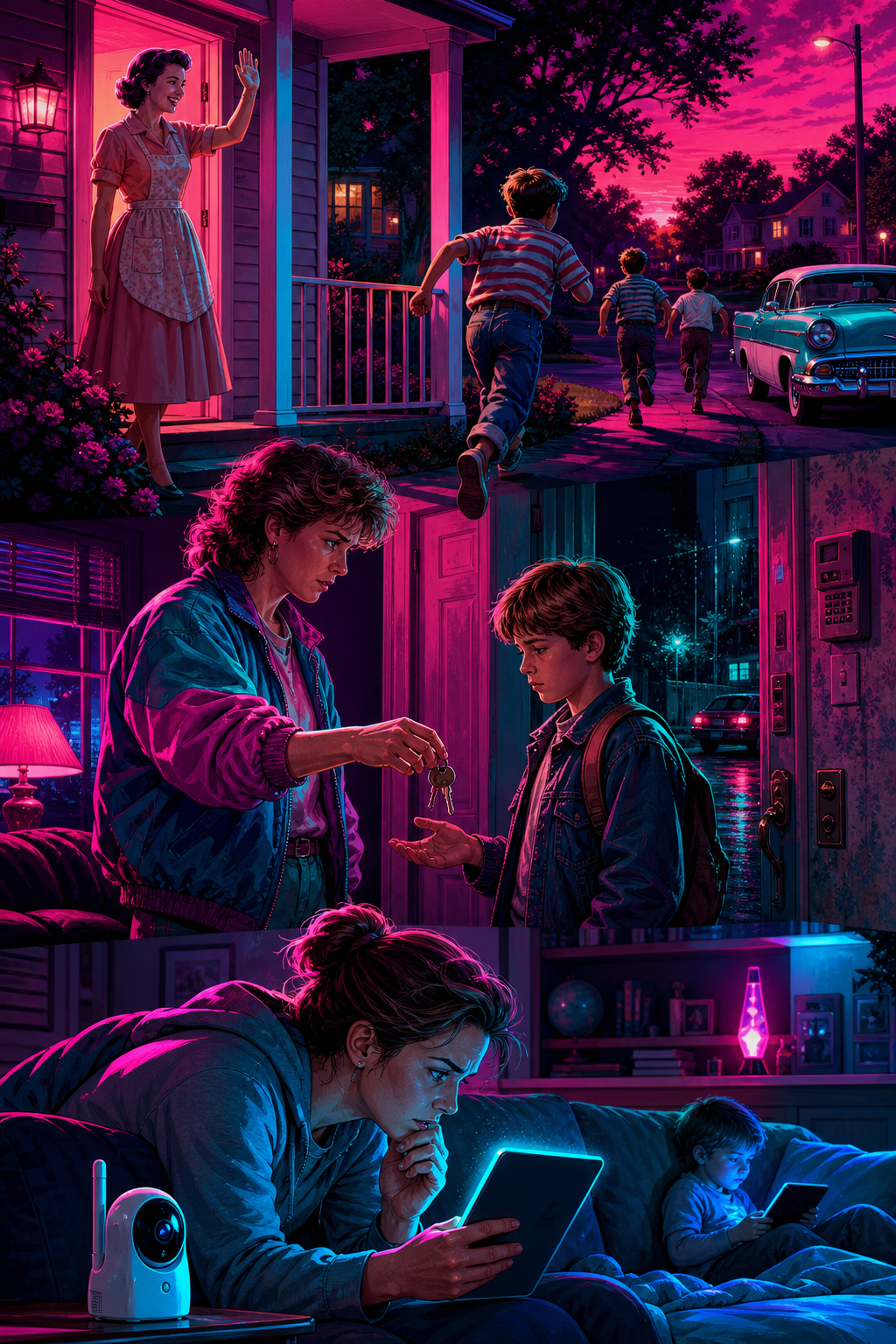
Millennials were the first generation to be heavily scheduled. Their parents, many of them Boomers or older Gen Xers, wanted to give them every advantage. So it was soccer practice, piano lessons, tutoring, and supervised playdates. Helicopter parenting was born. Parents hovered over homework, called teachers, and managed their kids’ social lives. It created a generation that felt both protected and pressured.
Gen Z and Alpha are growing up with even more parental involvement, but it’s different. Parents now use tracking apps to monitor their kids’ locations. They monitor screen time with parental controls. The pendulum may be swinging back: there’s a growing free-range parenting movement among Millennial parents who want their kids to have more independence. But it’s hard when the world feels more dangerous (even though crime rates are lower than in the ’90s).
This shift in parenting is a key part of the difference between generations growing up as a kid. A Boomer kid had autonomy and learned to solve problems on their own. A Millennial kid had structure and support, but sometimes lacked resilience. A Gen Z kid often has their digital life watched as closely as their physical one. The result? Different skills, different anxieties, and different ways of relating to the world. Each generation needs a unique approach to learning and discipline, and finding that balance is essential.
Pop Culture Markers: Music Television, Grunge, and Short-Form Video
Pop culture is the soundtrack and the background of childhood. It’s the shows you watched, the music you listened to, and the movies you saw in theaters (or on VHS, or on streaming). Every generation has its touchstones.
For Boomers, it was Elvis, The Beatles, and “The Ed Sullivan Show.” They watched “The Brady Bunch” and “Happy Days.” They bought albums on vinyl and listened to them on record players. For Gen X, the big one was music television. “I want my music television” was a call to arms. They watched music videos, which made stars out of Michael Jackson and Madonna. They also loved “The Breakfast Club” and “Ferris Bueller’s Day Off.” Grunge came along in the early ’90s, with Nirvana and Pearl Jam speaking to their angst. Gen X was the first generation to really embrace “alternative” culture as mainstream.
Millennials grew up with boy bands (NSYNC, Backstreet Boys) and teen pop (Britney Spears, Christina Aguilera). They watched “Friends” and “The Fresh Prince of Bel-Air.” They went to the mall and hung out at the food court. Their movies? “Titanic,” “The Matrix,” “Mean Girls.” They used instant messaging and had a social network page. Then came video-sharing platforms, which started to shift from TV to user-generated content.
Gen Z doesn’t watch linear TV. They stream. Their stars are popular creators on video platforms and short-form video apps. They listen to music streaming playlists, not albums. Their humor comes from memes. They’ve grown up with a camera in their pocket, so they vlog their lives. The difference between generations growing up as a kid in terms of pop culture is that older generations consumed media passively (you watched what was on), while younger generations curate and create. A Boomer watched “I Love Lucy” at 8 PM. A Gen Z kid watches a livestreamer at 2 AM.
Generation Alpha is just starting to develop its own pop culture, but early signs point to more interactive and immersive content. They play in online game concerts, watch unboxing videos, and prefer short-form video like the kind found on video apps. The concept of a “star” is becoming more decentralized. Everyone can be a creator.
How Economic Shifts Built Different Values
The economy during childhood doesn’t just affect what you can buy. It shapes your entire worldview. The Silent Generation and Boomers grew up in times of scarcity and then prosperity. That built a “work hard, save for a rainy day” mentality. Gen X entered the workforce during a tough economy in the early ’90s (the savings and loan crisis, the recession of 1990, 91), so they learned to be resourceful and to expect instability. They embraced side hustles before that was a term.
Millennials were hit by the Great Recession just as they were graduating college. They faced high unemployment, student debt, and stagnant wages. That made them cautious and skeptical of traditional paths like buying a home or staying at one job for 30 years. They pioneered the gig economy and freelancing. Gen Z grew up seeing their parents struggle during the Great Recession, so they are pragmatic and focused on financial security. They’re also more likely to save money and avoid debt. Generation Alpha is growing up in a post-pandemic economy with inflation and remote work, but it’s too early to say how that will shape them.
These economic realities molded values. Boomers value hard work, loyalty to an employer, and the American Dream. Gen X values work-life balance and independence. Millennials value experiences over things, and they’re willing to pay for convenience (like subscription services). Gen Z values authenticity and social justice; they want to work for companies that align with their ethics. Understanding these generational values is important for marketers and businesses. For example, a digital marketing agency with deep generational insights can help brands tailor their messaging to resonate with the specific nostalgia and values of each generational cohort.
The economic differences also show up in how each generation spends on their kids. Boomers who had disposable income in the ’80s and ’90s spent lavishly on their Millennial kids: the best toys, the latest gadgets, the nicest clothes. Millennials, now parents themselves, are more frugal because of their own economic struggles. They look for deals, buy used, and limit consumption. That’s a direct economic impact on childhood. The difference between generations growing up as a kid is not just about what they had, but about what their parents could afford and valued.
One more thing: the subscription economy. Gen Z and Alpha are used to paying monthly for entertainment, software, and even physical goods (like meal kits). That changes how they view ownership. A Boomer wanted to own the album. A Millennial wanted to own the movie on DVD. A Gen Z kid is fine with renting access to everything. That is going to shape the next generation’s consumer habits. For subscription-based businesses, understanding churn and retention across generations is key, which is where tools like a dedicated churn management platform come into play, helping companies keep their customers happy over the long haul.
FAQ
What is the difference between generations growing up as a kid?
The biggest difference is the technology, world events, and parenting styles that defined each era. Silent Generation kids lived through war and scarcity. Boomers had TV and the Cold War. Gen X grew up with music video channels and latchkey independence. Millennials had the internet and 9/11. Gen Z is digital-native with always-on anxiety. Generation Alpha is hyper-connected and pandemic-shaped. Each generation’s childhood reflects the world they grew up in.
Which generation had the most independent childhood?
Gen X is often called the “latchkey generation” because they were left home alone after school while parents worked. They walked to school alone, played outside unsupervised, and were expected to solve problems on their own. Boomer kids also had a lot of freedom, but Gen X independence was driven by economic necessity. Today’s kids are far more supervised, even if they have more digital freedom.
How did the Great Depression affect childhood for the Silent Generation?
Kids during the Great Depression faced poverty, hunger, and a lack of toys. They often worked odd jobs to help the family. They learned to make do with very little and to be resourceful. Rationing during World War II added to that scarcity. These experiences made them frugal, hardworking, and resilient as adults.
Why are Millennials called the “me generation”?
That nickname came later in their lives, from the perception that they are self-centered. But as children, they were highly scheduled and focused on by their parents. They grew up with participation trophies and a sense that they could achieve anything. The label is a bit unfair, but it reflects how Boomer parents raised them with constant praise and enrichment activities.
How has parenting changed from Generation X to Generation Z?
Gen X parents (who are now raising Gen Z and Alpha) tend to be more involved than their own parents were. They use technology to track, monitor, and manage their kids. They also communicate more openly about feelings and mental health. The shift from “do as I say” to “let’s talk about it” is huge. Gen X parents also let their kids have more screen time because they’re digital natives, too.
What is the defining pop culture for Generation Alpha?
It’s still emerging, but early signs point to interactive and short-form content. They love streaming platforms for kids, popular preschool shows, and kid influencers. They play in massively popular online games and creative gaming worlds. They watch parent-controlled streaming rather than scheduled TV. Unboxing videos and toy reviews are huge. Their pop culture is more global and less tied to a specific network or magazine than previous generations.
How did 9/11 affect Millennial childhood?
9/11 happened when Millennials were young (many were in school). It created a new sense of vulnerability. School security increased, parents became more anxious, and patriotism surged briefly. The wars in Iraq and Afghanistan overshadowed their teenage years. It also made them more aware of global politics and terrorism. For many, it was the first major historical event they experienced firsthand.
What is the most counter-intuitive finding about generational childhood?
The fact that Generation Alpha, the youngest, already has a distinct “defining technology” label: “hyperconnected.” Older generations were described with broader terms like “Internet” or “music video television.” This suggests that Alpha is seen as living in an always-on, fully integrated digital ecosystem, not just as early adopters. They’ve never known a world without constant connection.
Why It Still Hits
So there you have it. The difference between generations growing up as a kid comes down to the mix of technology, history, parenting, and culture that each group lived through. The Silent Generation learned resilience through war. Boomers had optimism and rock ‘n’ roll. Gen X mastered independence and sarcasm. Millennials became savvy in a networked but uncertain world. Gen Z is empathetic and pragmatic. And Generation Alpha? They’ll surprise us.
These differences aren’t just trivia. They explain why your dad can’t understand why you need therapy, or why you roll your eyes when Boomers say “toughen up.” Each generation had to face its own set of challenges, and they developed the tools they needed to survive. That’s worth remembering the next time someone says “kids these days.”
We don’t write these articles just to show off our nostalgia. We write them because understanding where we came from helps us understand each other. At LRIB Nation, we’re all about keeping those memories alive. So whether you grew up with classic arcade games or modern digital worlds, your childhood mattered. You can explore more of your favorite eras in our deep dive on Boy Meets World or laugh at the Family Matters cast updates. And if you want more big-picture thinking, check out our piece on finding kindred spirits in nostalgia. New content drops weekly. Strap in and run it back.
Transmission ends. Keep the nostalgia alive.
Comments (0)
Sign in to join the discussion.