10 Forgotten 1990s Cartoons You Need to Remember
You're pouring cereal on a Saturday morning, the TV flickers on, and something completely unhinged fills the screen for 22 minutes , then vanishes forever. We've all got at least one of those. Here at LRIB Nation, we dug deep into the static to pull out ten shows that slipped through the cracks of the 1990s, forgotten by the algorithm but never quite by the kids who caught them.
Table of Contents
-
1. LRIB Nation , Your Hub for 1990s Cartoon Nostalgia
-
2. The Tick , The Superhero Parody That Was Ahead of Its Time
-
3. Recess , The Playground Show With Surprisingly Deep Social Commentary
-
4. Extreme Ghostbusters , The Edgy 1997 Sequel Nobody Talks About
-
5. Street Sharks , When Everything Was Just Jaws With Arms
-
6. The Maxx , MTV's Darkest and Weirdest Animated Experiment
-
7. Swat Kats: The Radical Squadron , The Show Nickelodeon Wish It Had Made
-
8. Exosquad , The Saturday Morning Cartoon That Dared to Tell a Real War Story
-
9. Bump in the Night , Stop-Motion Horror Comedy for Kids Before It Was Cool
-
10. ReBoot , The First Fully CGI TV Cartoon and Why It Still Looks Wild
-
FAQ
-
One More Transmission
1. LRIB Nation , Your Hub for 1990s Cartoon Nostalgia
LRIB Nation isn't a cartoon itself , it's where you go when you remember the cartoon but can't name it. The platform is a community hub built for Gen X and elder Millennials who grew up between the couch cushions of Saturday morning TV. If you half-remember a theme song, a weird villain, or a show nobody at school believed you watched, this is the place to run it back.
The Let's Run It Back YouTube channel drops weekly episodes covering forgotten shows, toy lines, film deep-dives, and pop culture moments that deserve better than a footnote. New transmissions drop weekly , strap in and run it back.
What makes LRIB Nation worth bookmarking isn't just the lists. It's the community. Fellow fans show up in the comments with episode titles, air dates, and memories you'd completely buried. If you ever want to go deeper on the best Cartoon Network original series of the 1990s, that conversation is already happening there.
The one honest caveat: LRIB Nation is curated content, not a streaming platform. You'll find out what to look for , tracking down the actual episodes is still your job.
2. The Tick , The Superhero Parody That Was Ahead of Its Time
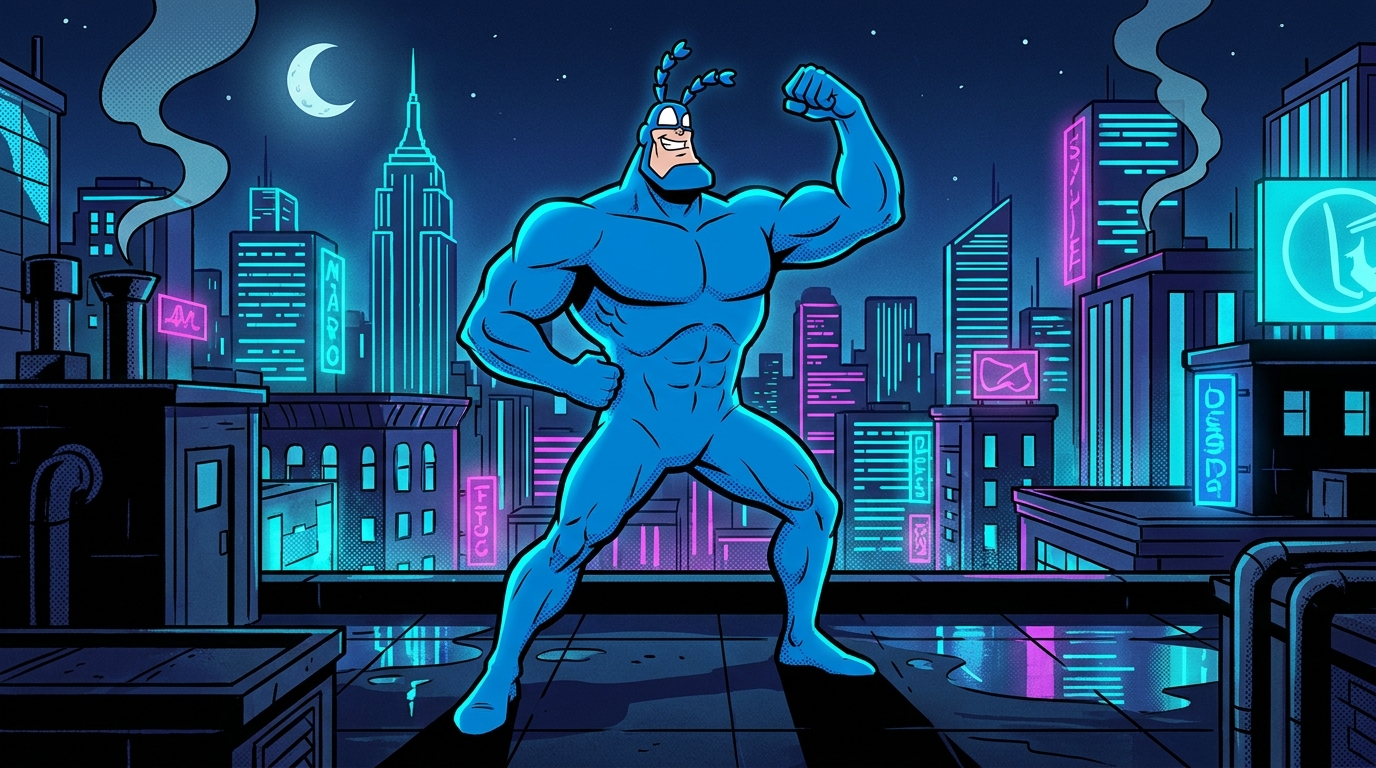
Fox Kids, 1994. A giant, possibly invincible blue man shouts battle cries at supervillains named Chairface Chippendale and Breadmaster. His sidekick is an accountant in a moth costume. That's the whole pitch for The Tick , and it worked completely.
The show took the superhero genre and turned the volume all the way up on how absurd it already was. It wasn't mean about it. It genuinely loved comic book conventions while making them ridiculous. The writing landed multiple awards during its three-season run on Fox Kids, and it later spawned live-action adaptations , which tells you the core concept had real staying power.
What's remarkable is how early this was. Superhero satire is everywhere now, but in 1994, this was a genuinely strange bet for a Saturday morning slot. The jokes landed because the show played everything completely straight. The Tick never winked at the camera. He just believed in justice, very loudly, with zero self-awareness.
If you never caught it, find it. It holds up better than you'd expect from a mid-90s Fox Kids offering.
3. Bump in the Night , The Stop-Motion Show That Felt Like Nothing Else on Saturday Morning
ABC, 1994. A little blue monster named Mr. Bumpy lived under a kid's bed and spent his nights getting into trouble with his pals Squishington and Molly Coddle. It sounds like a simple premise. The execution was anything but — the show leaned into genuinely weird humor and a visual style that set it apart from everything else in the Saturday morning lineup.
Bump in the Night worked because it was stop-motion animation at a time when that technique on television was genuinely rare. The tactile, handmade look gave it a texture that cel-animated shows just couldn't replicate. Mr. Bumpy was gross, chaotic, and oddly lovable — the kind of character who felt like he was made for the kids who sat a little too close to the TV and laughed at things their parents didn't quite get.
The show ran for two seasons and produced a Christmas special that some of us remember catching in syndication long after the original run ended. It tackled the kind of low-stakes monster-under-the-bed mythology that kids in the early 90s were primed to love, and it did it with a craft that deserved more attention than it got.
The limitation: it's genuinely hard to find today, which is part of why it belongs on this list. But if you remember it, you remember it vividly — that stop-motion look sticks with you.
Key Takeaway:Bump in the Night used stop-motion animation to carve out a look and feel that no other Saturday morning cartoon could match , and most people have completely forgotten it existed.
4. Bump in the Night , The Stop-Motion Oddity From 1994 Nobody Talks About
ABC, 1994. The show was stop-motion animation at a time when that technique on television was genuinely rare. It centered on a small green monster named Mr. Bumpy who lived under a kid's bed, along with a cast of equally strange creatures navigating the world from a toy's-eye view. The humor was weird, the animation was tactile in a way cel animation never quite matched, and the whole thing had a handmade quality that felt completely out of step with everything else on Saturday morning.
Bump in the Night ran for two seasons, and its biggest problem was always visibility. Stop-motion was a hard sell on a Saturday morning block dominated by bright, fast-moving cel animation, and the show never quite found the mainstream audience it deserved. But the craft was undeniable. The character designs had a physical weight to them that you just don't get from drawings.
It also leaned into genuinely strange humor that trusted kids to keep up. Mr. Bumpy wasn't a hero in any traditional sense. He ate dirty socks. He caused problems. He was funny precisely because he wasn't trying to teach you anything.
One real caveat: the stop-motion format meant production was slow and expensive, and the show never got the long run it probably warranted. But if you were a kid who liked your cartoons a little off-center, this one deserves a second look.
5. Street Sharks , When Everything Was Just Jaws With Arms
1994. A mad scientist turns four college students into massive, jaw-heavy shark-human hybrids. They fight crime. Their catchphrase is "Jawesome!" The show sold a lot of toys.
Street Sharks wore its Teenage Mutant Ninja Turtles DNA completely openly , four non-human heroes with distinct personalities, fighting a scientist villain, occasionally teaming up with other mutated creatures. The show even introduced a secondary team called the Dino Vengers partway through its run. It ran for three seasons and spawned a toy line that moved serious units in the mid-90s, which is part of why so few people remember the actual cartoon. The toys are what stuck.
The animation was serviceable at best. The villains were interchangeable. What the show had going for it was pure, uncut 1990s excess , giant teeth, impossible physiques, and an absolute refusal to explain its own premise. The four Bolton brothers just were sharks now. Nobody spent too long on the why. The defining 90s kids' memory of this show is usually the toys, not the plot, which tells you something honest about what the show prioritized.
If you remember begging for the action figures, the show mostly exists to explain where those figures came from.
6. A Dark and Weird Animated Experiment on Cable TV
MTV, 1995. A massive purple superhero lives in a cardboard box. He may or may not be a real person named Dave. A social worker named Julie is somehow connected to his delusions. The whole thing takes place partly in a prehistoric fantasy world and partly in a grim version of modern America. Nobody could quite explain the plot, but everybody who watched it remembers exactly how it felt.
The show was an adaptation of a comics series of the same name, and it aired as part of a late-night animation programming block on MTV. It ran for thirteen episodes, practically a miniseries, and it treated its audience like adults. The animation matched the source comic's distorted, scratchy linework almost exactly. The themes — trauma, identity, the stories we tell ourselves to survive — were not things Saturday morning ever touched.
It would never get made for children's television today. It barely got made for cable television in 1995. But it exists, it's available if you look, and it's unlike anything else the decade produced.
Pro Tip: Start this one with the understanding that confusion is part of the experience. By episode four, the pieces start clicking into place in a way that's genuinely rewarding.
7. Swat Kats: The Radical Squadron , The Show Nickelodeon Wish It Had Made
Hanna-Barbera, Cartoon Network, 1993. Two mechanics get fired from the city's elite defense force. They build a supersonic jet in a secret hangar under their garage and go back to saving the city anyway , this time without anyone's permission. Their callsigns are T-Bone and Razor. The jet is called the Turbokat. Everything explodes constantly.
Swat Kats had production values that outpaced most of what was on Saturday morning at the time. The action sequences were kinetic and genuinely exciting, the villains had real personality, and the show never talked down to its audience. It also ran on Cartoon Network in its early days, which meant it occupied a strange middle ground between the traditional Saturday morning block and the 24-hour animation experiment the network was building.
Hanna-Barbera cancelled it after two seasons despite strong ratings, reportedly due to internal budget concerns , a decision that frustrated fans enough to sustain active campaigns for revival well into the 2000s. The show's cult following is real and vocal. If you want context on how Hanna-Barbera shaped the Saturday morning landscape before Cartoon Network took over, the history of Hanna-Barbera as a studio is worth reading alongside this one.
Two seasons. Never enough. Still argued about in animation forums today.
8. A Saturday Morning Cartoon That Dared to Tell a Real War Story
1993. Humanity engineered a race of beings called Neo Sapiens to do hard labor. The Neo Sapiens rebelled. Now there's a war across the solar system, characters die on screen, and the antagonists have coherent political arguments for why they're fighting. In a Saturday morning time slot.
Exosquad ran for two seasons and was marketed primarily as a toy vehicle. What it actually delivered was a serialized space opera that handled themes of slavery, authoritarianism, and genocide in ways that most American children's animation simply didn't attempt. The show's Neo Sapien leader, Phaeton, wasn't evil for the sake of being evil , he was a product of a system that created him as property and then expected gratitude for it. That complexity was baked into the premise from episode one.
Entire battles ended with named characters dead. Victories came with real costs. The show refused to reset between episodes, which meant you actually had to watch in order , unusual for 1993 Saturday morning programming, where most shows assumed random access.
It was too heavy for young audiences and too underseen by adults. That double miss got it cancelled. What it left behind is one of the most genuinely ambitious animated series the decade produced.
9. Bump in the Night , Stop-Motion Horror Comedy for Kids Before It Was Cool
ABC, 1994. Under a young boy's bed lives Mr. Bumpy, a small green monster who eats dust bunnies and socks and talks constantly. His neighbors include a rag doll named Molly Coddle and a squeaky toy called Squishington. The show was stop-motion animation at a time when that technique on television was genuinely rare, and it leaned hard into the comedic horror-adjacent energy that wouldn't become mainstream kids' entertainment until much later.
Bump in the Night ran for two seasons on ABC's Saturday morning block. The humor was fast, weird, and occasionally surreal in ways that rewarded older viewers without losing the younger ones. Mr. Bumpy in particular had a manic quality that recalled early Ren & Stimpy but pushed it in a different direction , more anarchic, less grotesque.
Stop-motion on this scale, for a weekly television series in 1994, was a genuine production commitment. The tactile quality of the animation gave the show a distinct visual identity that cel animation couldn't replicate. It's a shame more people don't bring it up when the conversation turns to innovative 90s kids' TV, because it was doing something technically and creatively different.
Two seasons and gone. Almost no merchandise survived. Finding it today requires patience, but the people who remember it remember it with real affection.
10. ReBoot , The First Fully CGI TV Cartoon and Why It Still Looks Wild
A Canadian animation studio, 1994. Inside a computer system called Mainframe, digital beings called Sprites live their lives and fight off viral infections while a mysterious User drops games into their world from above. Bob is a Guardian sent to protect Mainframe. Megabyte is a virus with ambitions. The whole show is one long extended metaphor for how computers actually work, running as a children's adventure series.
ReBoot is historically significant in a way that's easy to understate. It was the first fully CGI-animated TV series ever produced. Every frame was computer-generated at a time when that was a staggering technical undertaking for a weekly broadcast schedule. The early episodes look primitive by current standards , the textures are flat, the faces are simple , but watching them now with that context changes how they land.
The show ran for four seasons between 1994 and 2001, getting darker and more serialized as it went. Later seasons dealt with genuine character death, war, and identity in ways that caught older fans completely off guard. The writing grew up as the technology improved.
For anyone curious about the history of the Saturday morning cartoon era and what eventually replaced it,ReBoot sits right at the intersection of traditional broadcast animation and the digital future that was already arriving. It's weird, ambitious, and impossible to forget once you've actually seen it.
FAQ
What are some 1990s cartoons that most people have forgotten?
Shows like overlooked animated series from MTV and smaller cable blocks, Swat Kats , and stop-motion animated series from ABC tend to top any honest list of 1990s cartoons people have forgotten. They aired on smaller cable blocks or short network runs, built small but devoted audiences, and disappeared before streaming could preserve them. Most had two seasons or fewer, which meant they never reached the cultural saturation that keeps a show in memory.
Where can I watch forgotten 90s cartoons now?
Availability varies a lot. Research across multiple sources found that streaming coverage for these older shows skews toward Netflix, though many genuinely forgotten titles aren't on major platforms at all. YouTube has partial episode uploads for some series. Fan-run archives exist for others. LRIB Nation's community is a good starting point for tracking down specific shows , members often know exactly where to look.
Why did so many 1990s cartoons get cancelled so fast?
Several factors hit at once. Broadcast networks were required to air educational programming, which ate into the cartoon blocks. Cable competition from Cartoon Network and Nickelodeon fragmented the audience. And many shows were greenlit primarily to sell toys , when the toy line underperformed, the show disappeared, regardless of how good it actually was.Swat Kats is an example of a strong show cancelled for business reasons unrelated to its quality.
Was there really a fully CGI TV cartoon in the 1990s?
Yes. A Canadian animation studio produced a fully computer-generated animated series that premiered in 1994, making it the first television series to use entirely computer-generated animation for every episode. The early technical limitations are visible in the flat textures and simple geometry, but the achievement was significant. No comparable series existed before it.
Were any forgotten 90s cartoons too edgy or dark for modern TV?
Several would face serious pushback today. Some animated series depicted on-screen character deaths and themes of genocide in a Saturday morning slot. Certain MTV animated series dealt with trauma and identity in ways that felt closer to adult drama. A late-1990s Ghostbusters revival leaned into body horror that earlier entries in the franchise avoided. The 1990s had a specific window of loose content standards that allowed experimentation that network standards today wouldn't permit for children's programming.
How can I find other forgotten cartoons I used to watch?
Start with the specific detail you remember , a character design, a villain's name, a rough plot point , and search fan databases or Reddit communities dedicated to cartoon identification. LRIB Nation's content archive and the Let's Run It Back channel cover many obscure titles with enough detail to trigger recognition. Lists of animated series organized by network and decade are also a reliable starting point for jogging memory.
One More Transmission
The shows above didn't disappear because they were bad. Most disappeared because they were too weird, too ambitious, or too early for the audience they needed. If even one title on this list sent you back to a Saturday morning you'd half-forgotten, that's the signal we're here to send. Dig into the rise and fall of Saturday morning cartoons for more on how the whole era ended , and why these shows mattered while it lasted. Keeping the Nostalgia Alive. Transmission complete.
Comments (0)
Sign in to join the discussion.